

Creative Agent
Writing a Four-Second Character Transformation Prompt
four-second character transformation prompt case study with saved ArtArch Studio media, prompt decisions, visible results, and practical production notes.
3 min read
ArtArch Newsroom
four-second character transformation prompt case study with saved ArtArch Studio media, prompt decisions, visible results, and practical production notes.
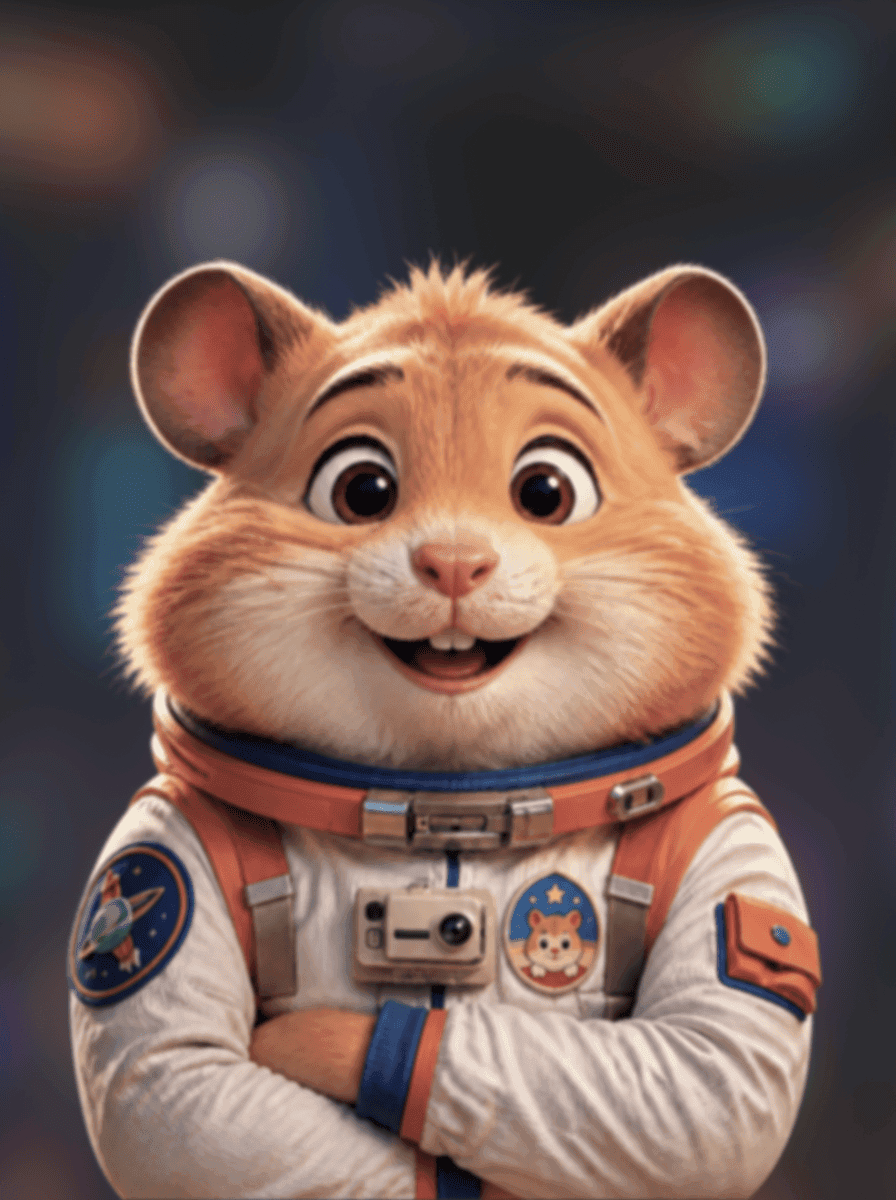
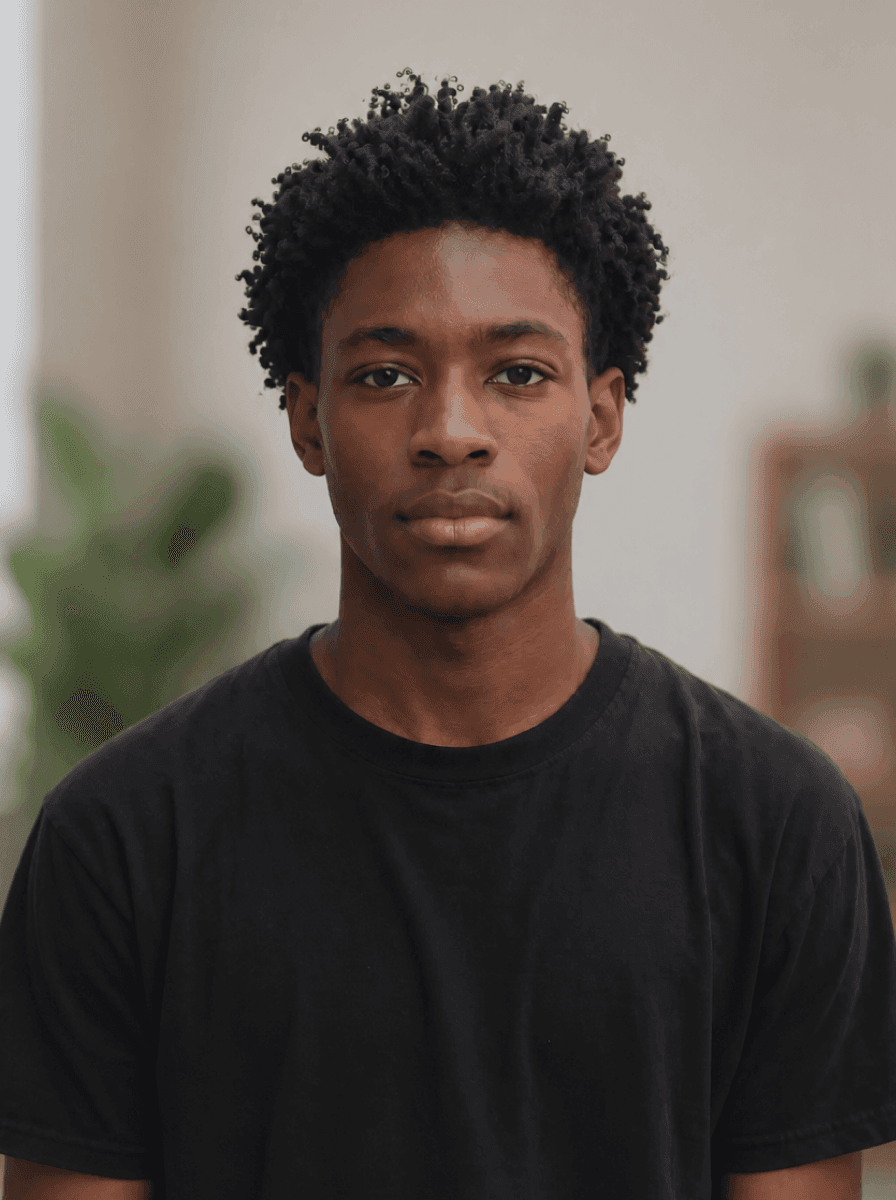
AI character endpoint consistency case study with saved ArtArch Studio media, prompt decisions, visible results, and practical production notes.
human-to-hamster AI transformation case study with saved ArtArch Studio media, prompt decisions, visible results, and practical production notes.
first-and-last-frame human-to-mascot video case study with saved ArtArch Studio media, prompt decisions, visible results, and practical production notes.
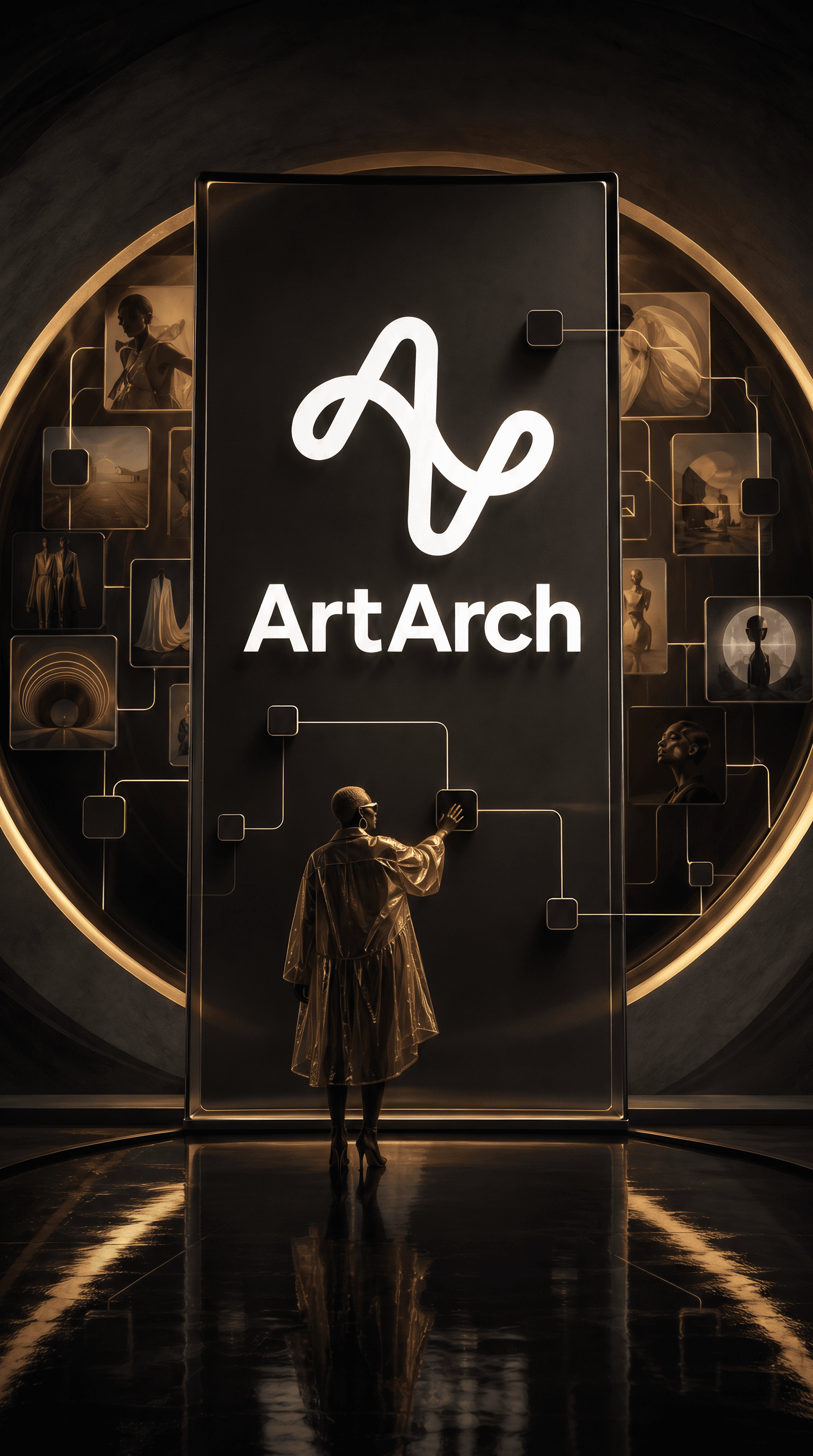
website assets to AI launch poster case study with saved ArtArch Studio media, prompt decisions, visible results, and practical production notes.
single-shot AI brand animation case study with saved ArtArch Studio media, prompt decisions, visible results, and practical production notes.
vertical AI platform arrival video case study with saved ArtArch Studio media, prompt decisions, visible results, and practical production notes.
preservation-first AI image cleanup case study with saved ArtArch Studio media, prompt decisions, visible results, and practical production notes.
AI video contact sheet case study with saved ArtArch Studio media, prompt decisions, visible results, and practical production notes.
ArtArch logo-first AI brand film case study with saved ArtArch Studio media, prompt decisions, visible results, and practical production notes.
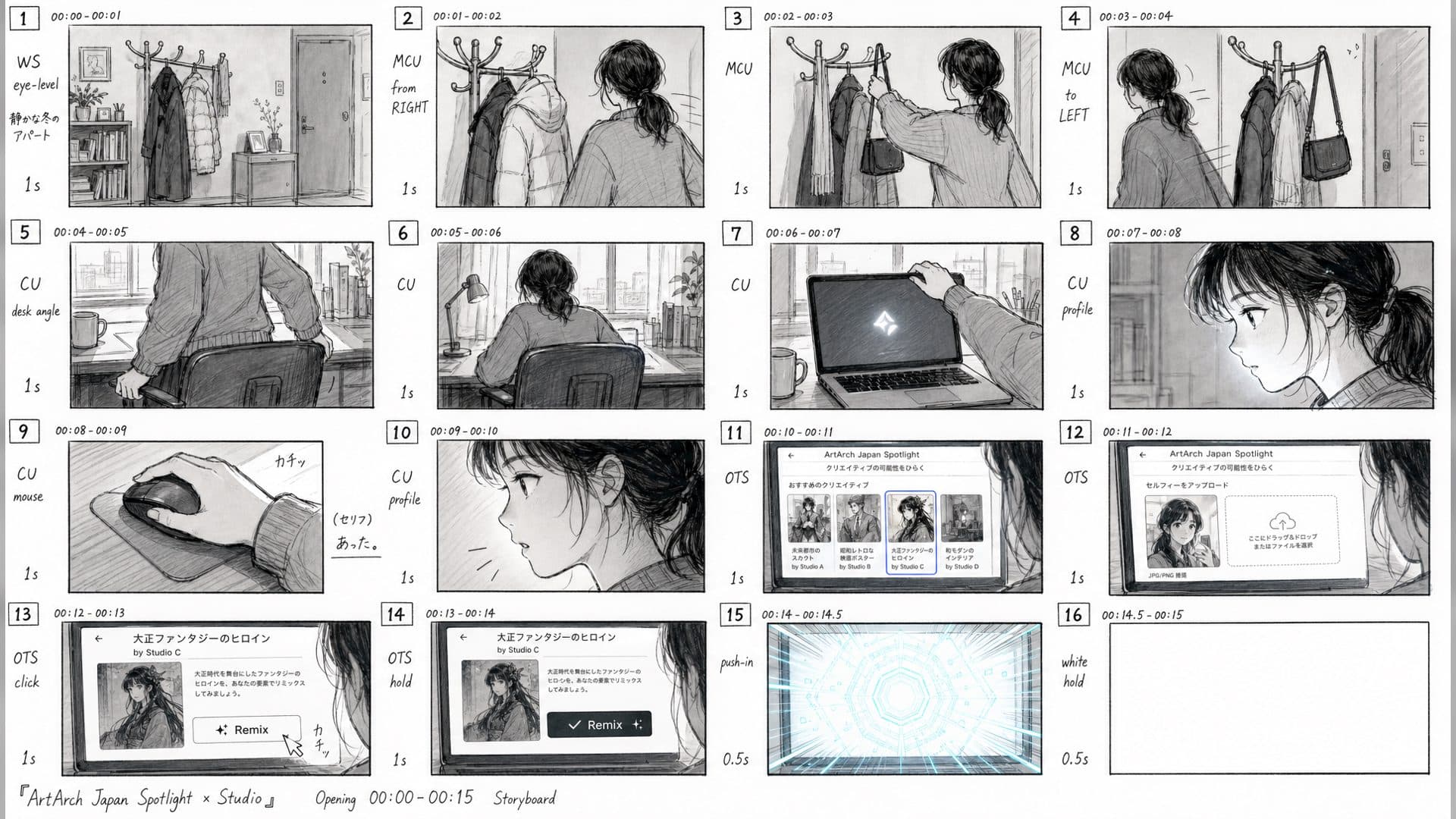
Stage an over-the-shoulder AI storyboard with clear foreground, screen geometry, eyeline, and camera movement.
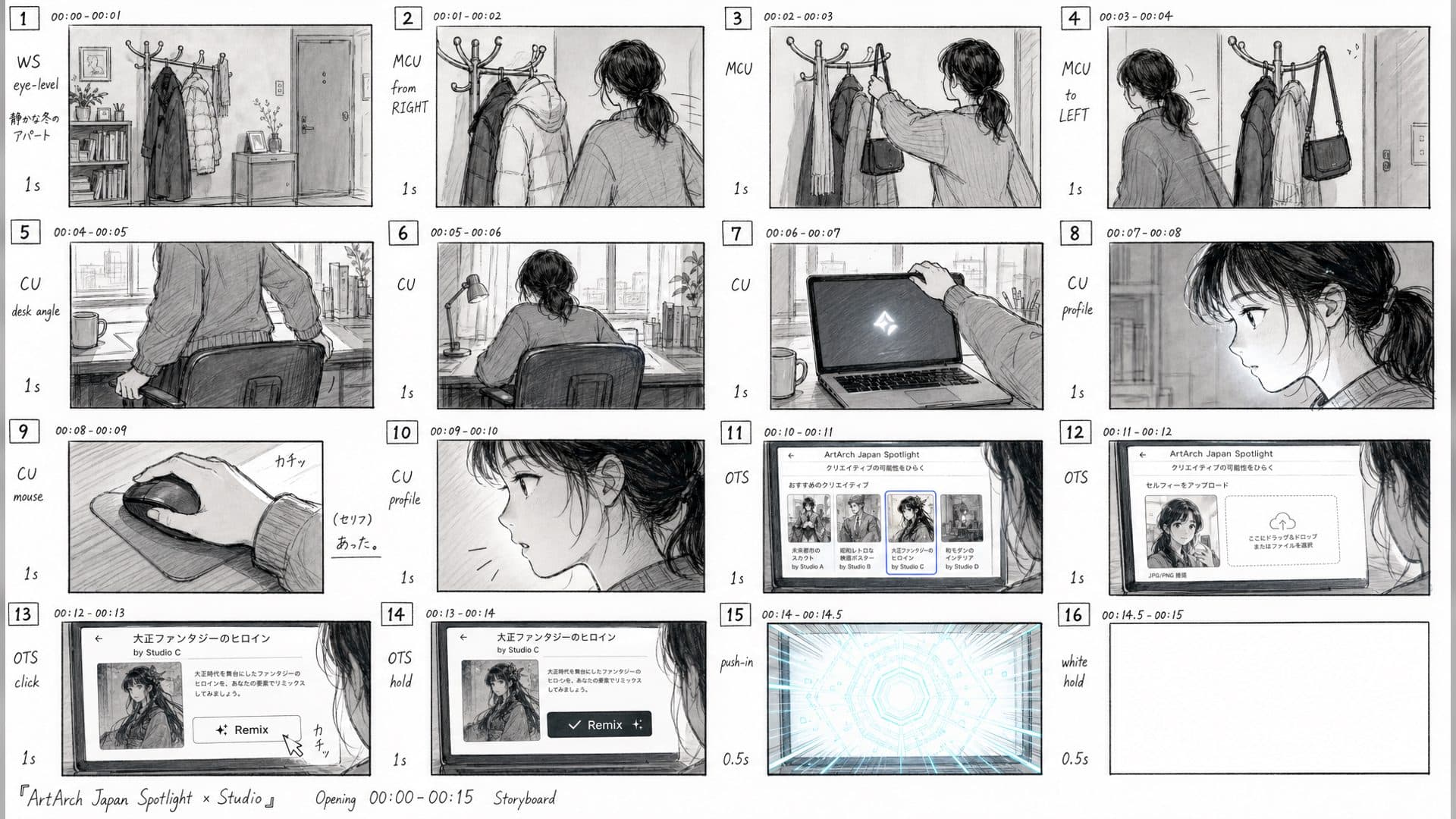
Plan a readable interface-to-fantasy transition with real UI references, one activation beat, and a controlled camera push.
Turn monochrome storyboard structure into a role-based color script for coherent AI art direction.
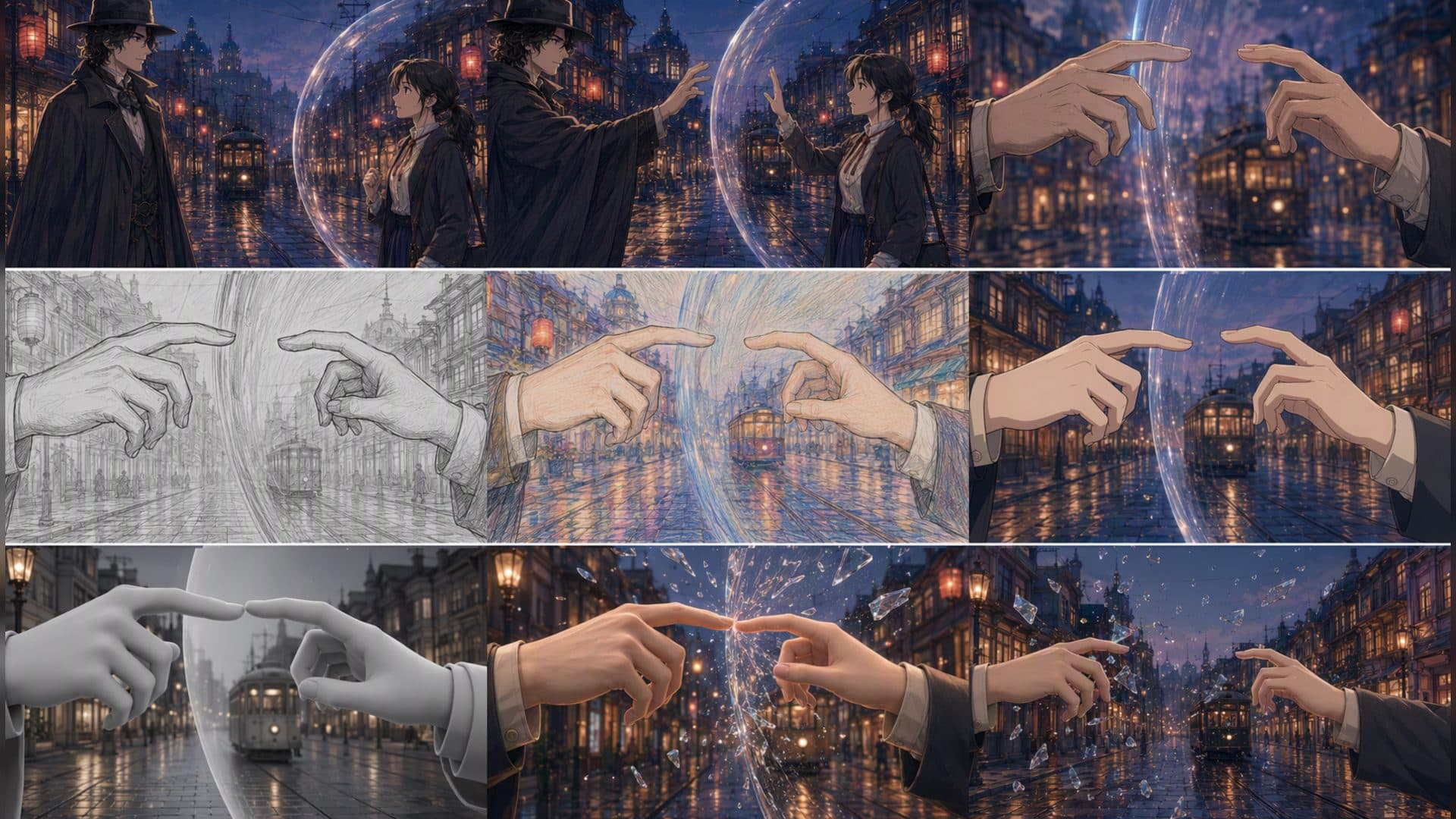
Use black-and-white storyboard art to judge shape, contrast, direction, and focus before adding color.
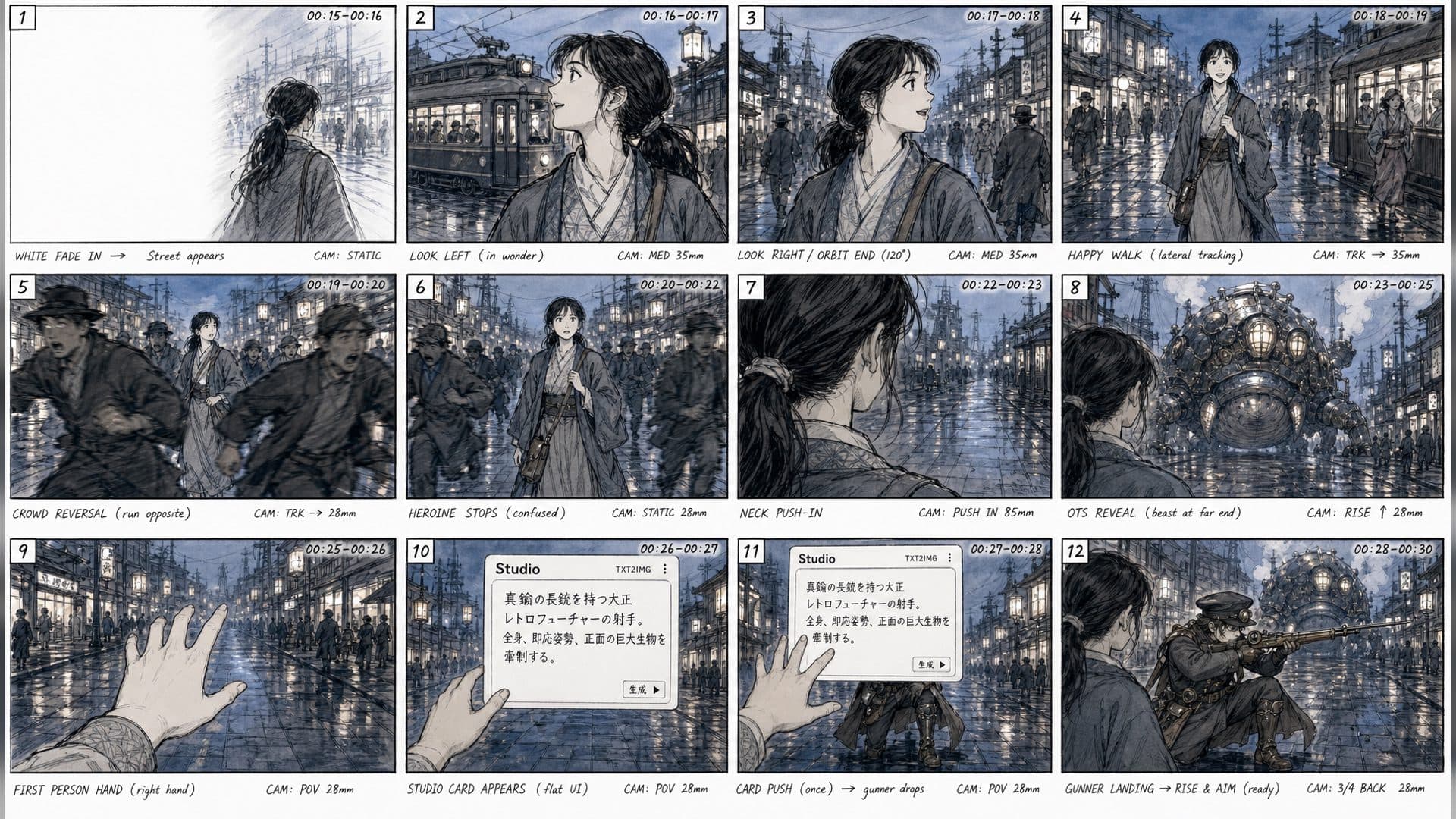
Protect hairstyle, clothing, silhouette, and props across a hand-drawn storyboard and AI video workflow.
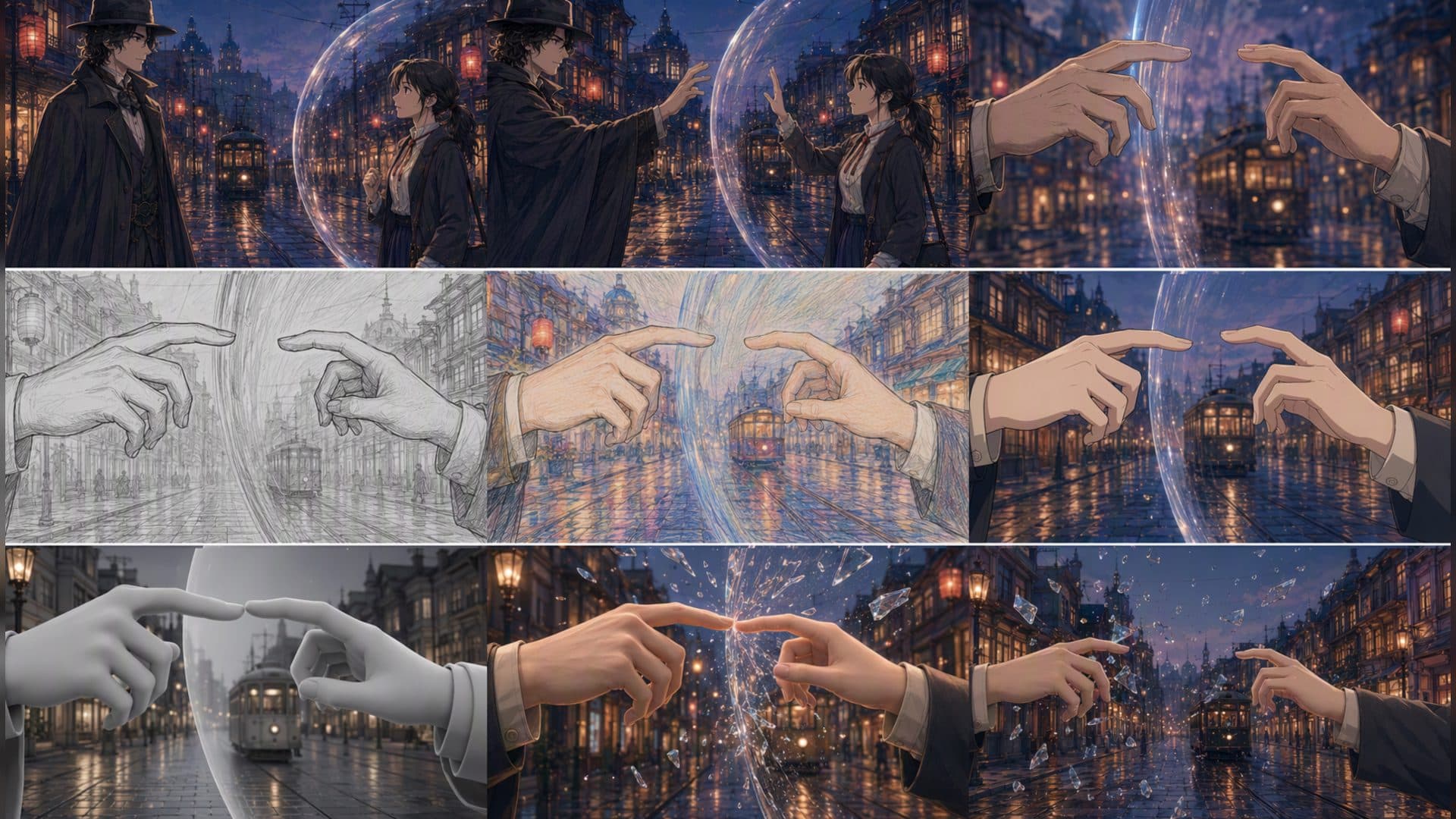
Use timing strips to give AI storyboard panels enough time for actions, cuts, and readable ending frames.
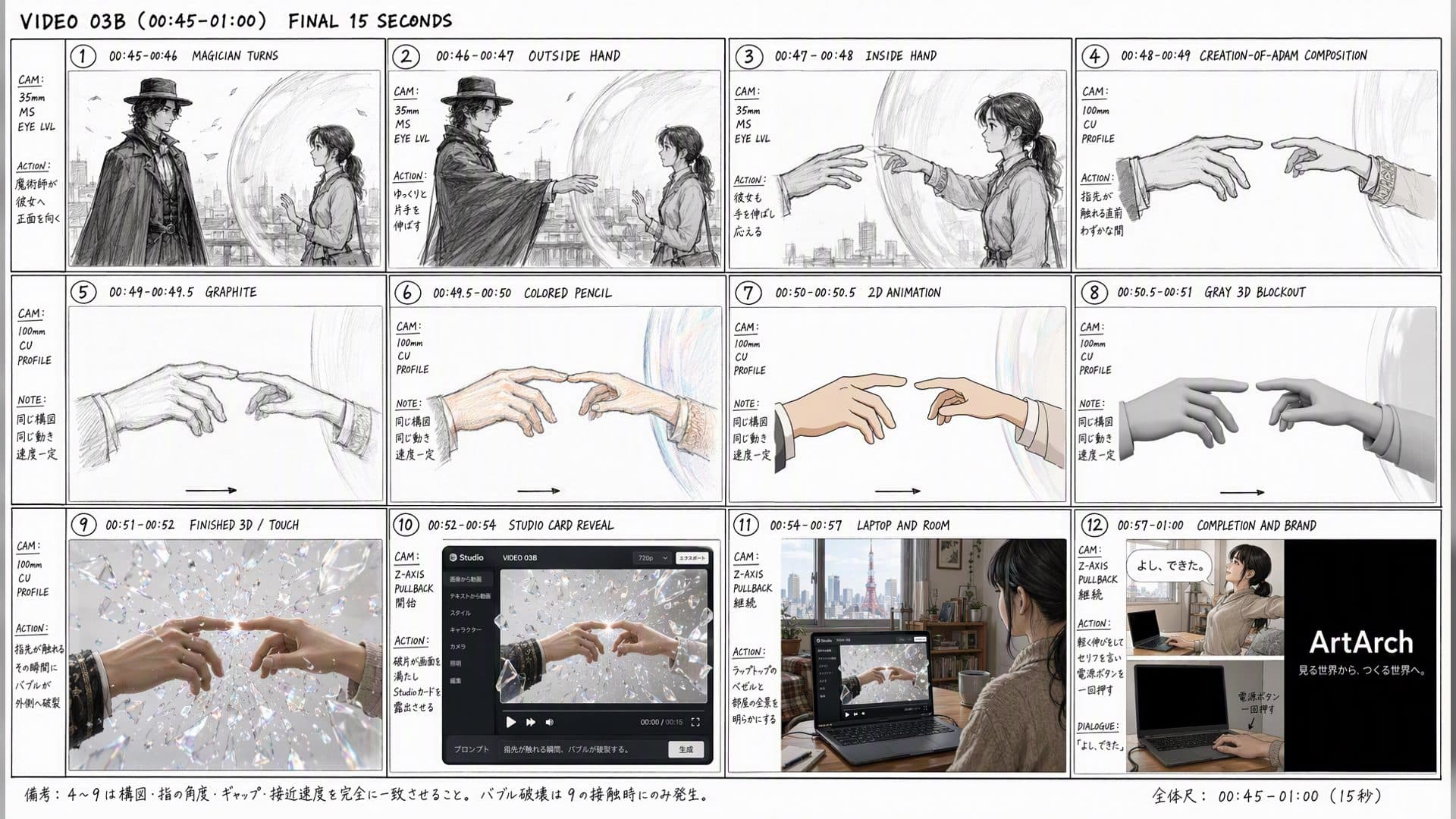
Use camera arrows, start frames, and end frames to turn storyboard movement into a clear AI video contract.
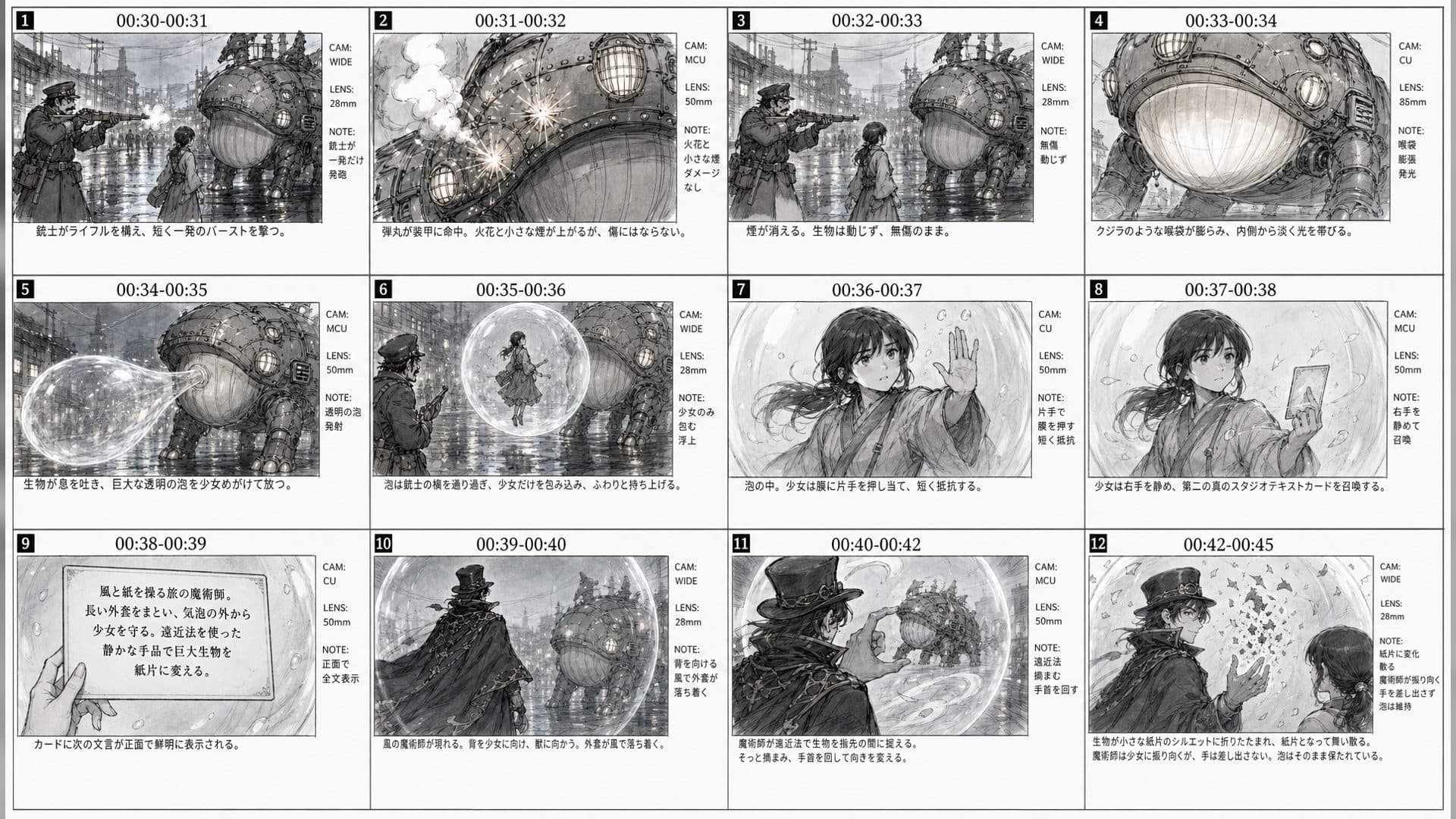
Understand when to use a rough storyboard for structure and a polished key visual for appearance in AI art.
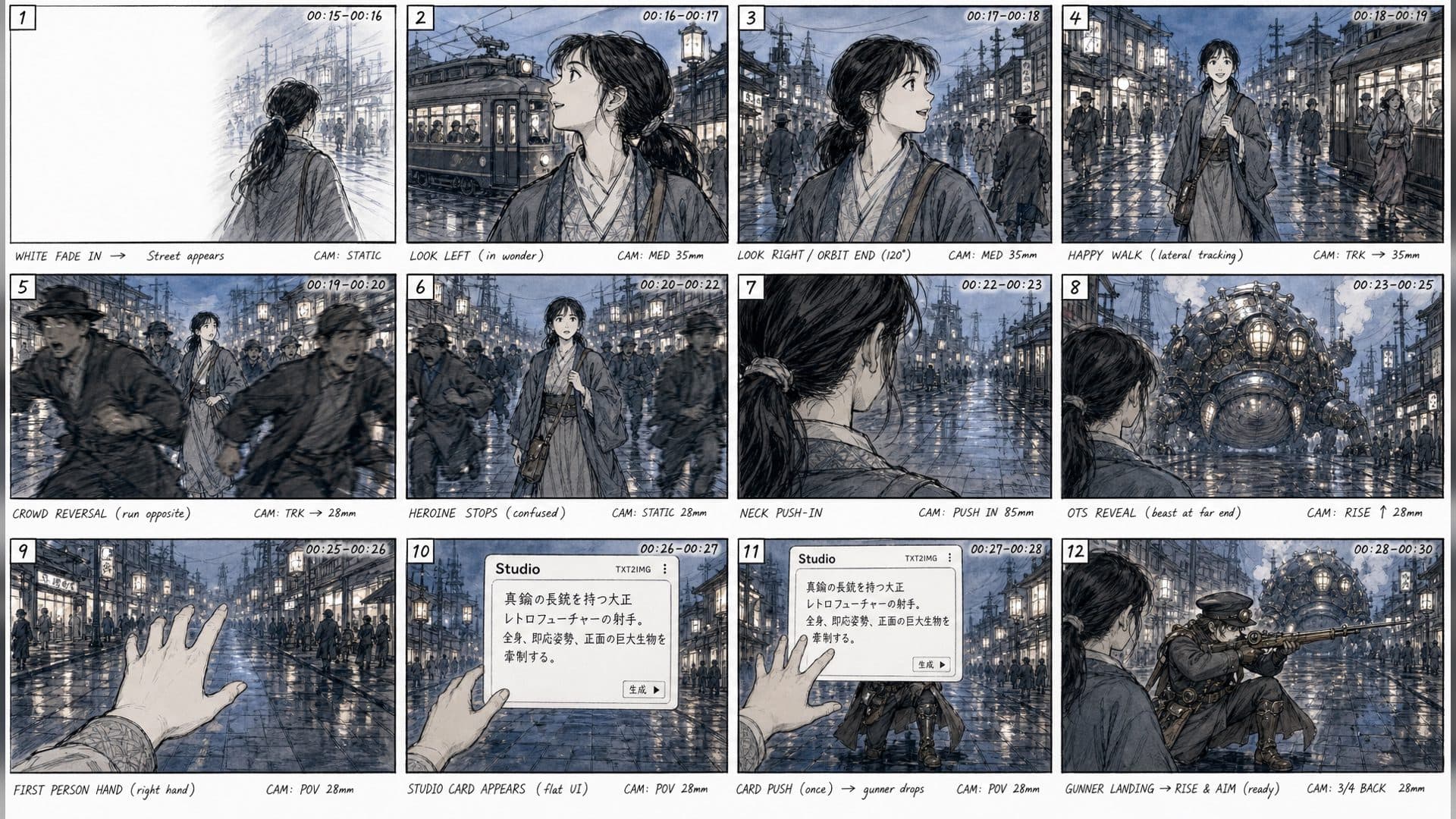
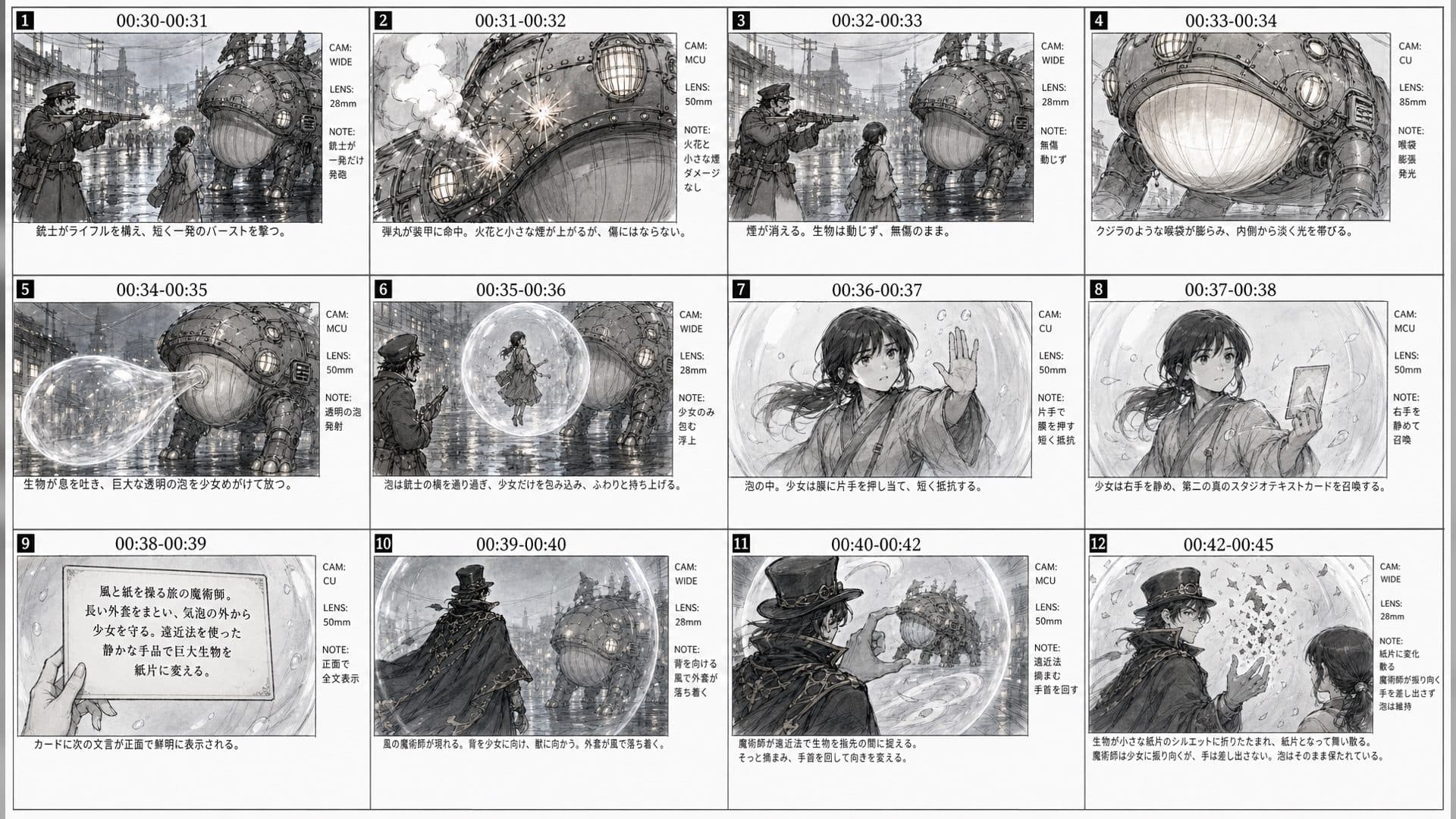
Read a 16-panel AI storyboard as a chain of screen direction, action, camera movement, and timing.
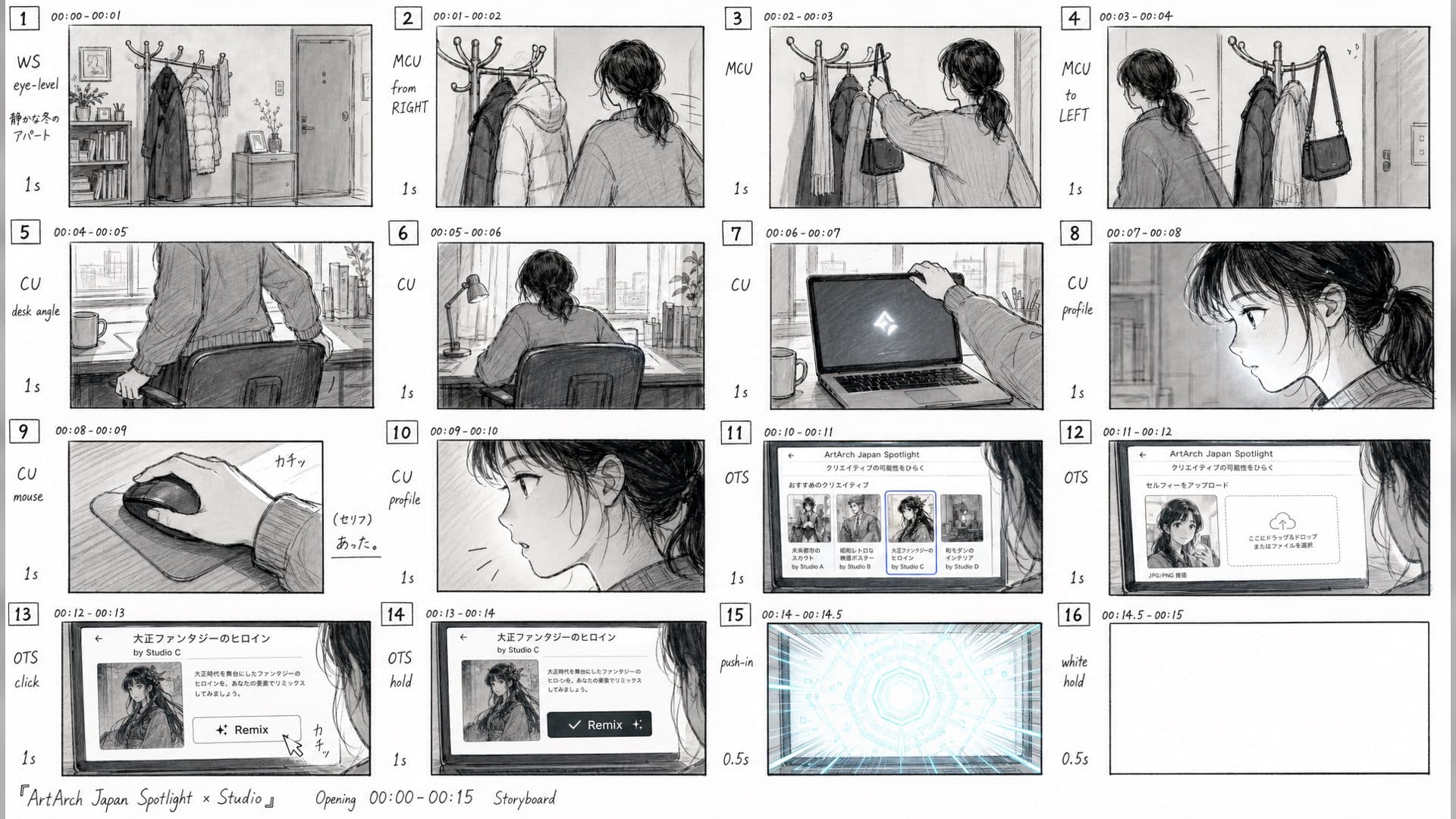
Learn how a rough sketch storyboard clarifies action, camera, and ending before an AI video run.