

ArtArch Newsroom
Creative AgentCharacter Continuity in a Hand-Drawn Storyboard
Protect hairstyle, clothing, silhouette, and props across a hand-drawn storyboard and AI video workflow.
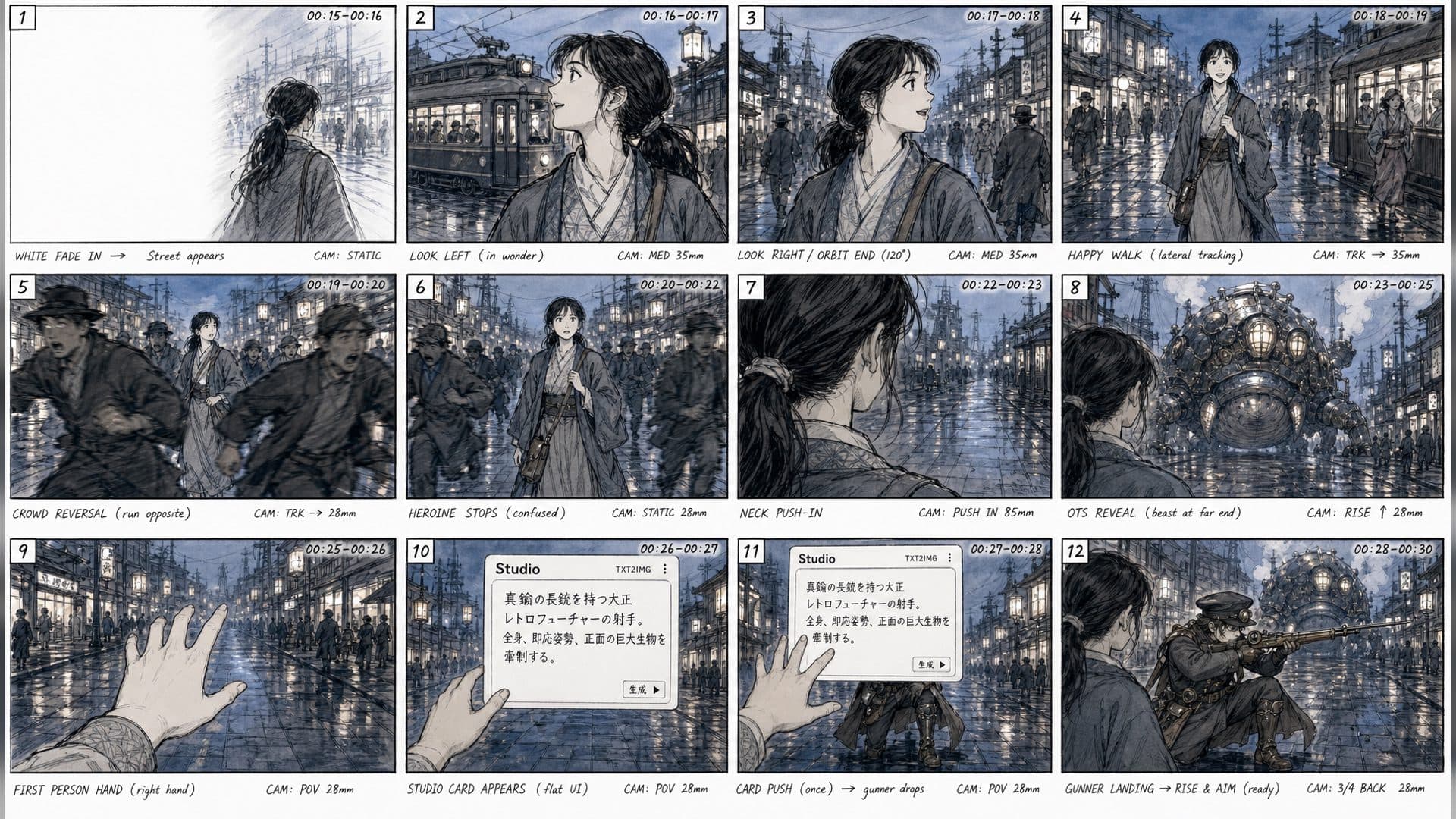
A character can look simple in a sketch and still need strict continuity. The viewer notices a changed hairstyle, jacket, or silhouette even when the lines are rough. A character continuity pass gives an AI agent a stable identity to protect as the sequence becomes more detailed.
Choose identity anchors
Pick three or four anchors: face shape, hairstyle, clothing silhouette, and one recognizable prop. Repeat those anchors in every panel where the character appears. Avoid adding new costume details in one panel unless the story explains the change.
Separate identity from motion
The panel may show a running pose, a back view, or a close-up. Those are motion and framing choices, not new identities. Label the identity reference separately from the storyboard panel so the agent knows which source controls which decision.
From monochrome to color
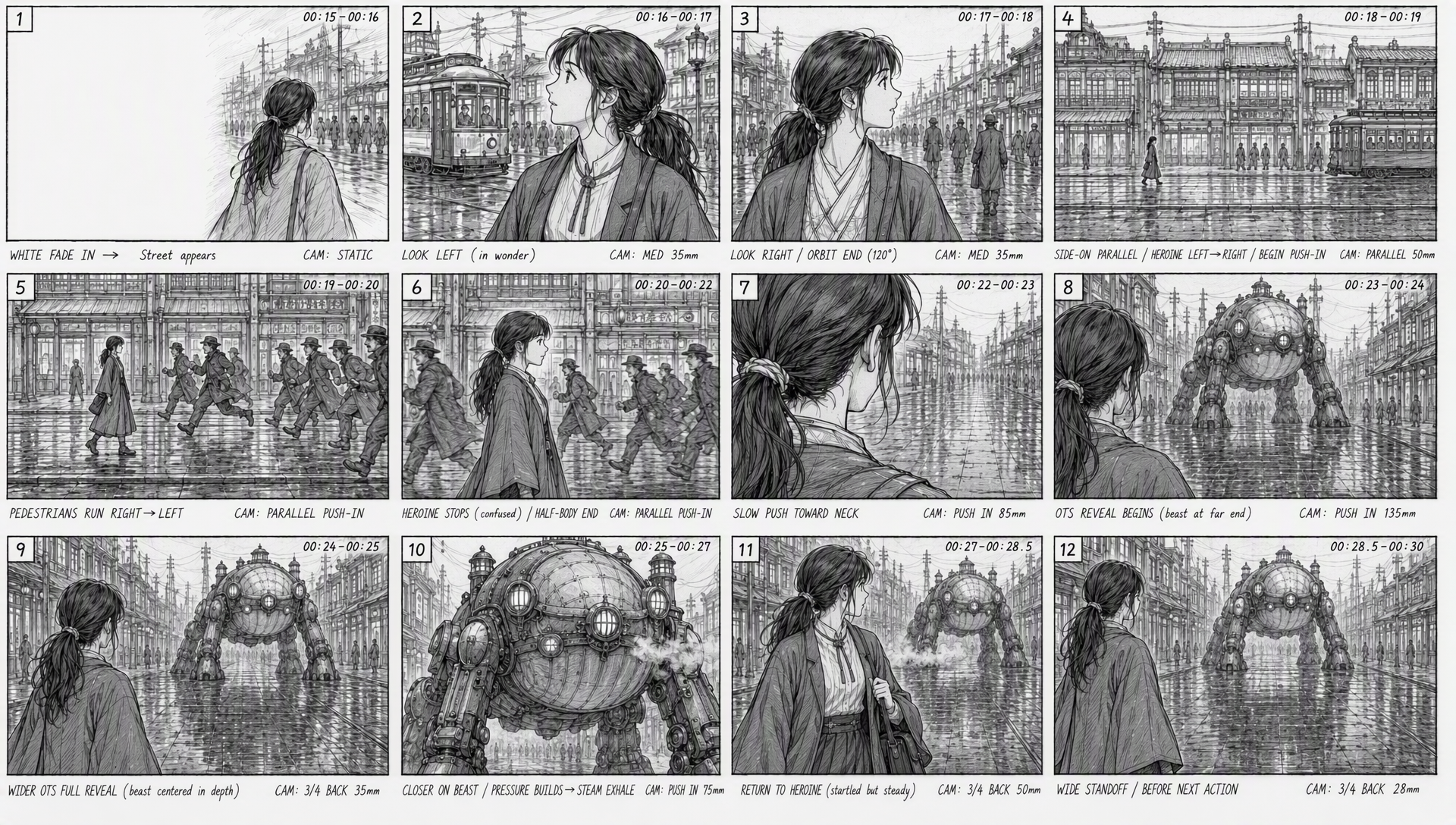
Once the line board is approved, create a color reference that preserves the approved pose and composition. Keep the monochrome sheet for timing and the color image for palette. This separation makes later troubleshooting much easier.
Add a continuity note beside every identity anchor. For example, say that the short ponytail remains visible in back view, or that a small bag stays on the same shoulder. These notes give a reviewer a quick way to spot the first accidental change.
Frequently asked questions
How many identity anchors are enough?
Three strong anchors are better than ten vague details.
Can a back view show a face reference?
Use the identity reference to preserve the person, but keep the face hidden if the shot calls for a back view.
What if one panel drifts?
Mark the first panel where the drift appears and revise that beat instead of rewriting the whole sequence.
Ask creative-agent to maintain an identity contract while you explore different poses and camera distances.
Keep exploring
More in Creative Agent

Designing a Three-Scene AI Character State Machine
three-scene AI character state machine case study with saved ArtArch Studio media, prompt decisions, visible results, and practical production notes.

Extracting First and Last Frames to Plan AI Video Transitions
AI video transitions case study with saved ArtArch Studio media, prompt decisions, visible results, and practical production notes.
Fan-Dance-to-Idle AI Transition With a Clean Endpoint
fan-dance-to-idle AI transition case study with saved ArtArch Studio media, prompt decisions, visible results, and practical production notes.
An Idle-to-Fan-Dance AI Transition With the Prop as the Cue
idle-to-fan-dance AI transition case study with saved ArtArch Studio media, prompt decisions, visible results, and practical production notes.