

ArtArch Newsroom
Creative AgentDesigning an AI Storyboard for a UI-to-Fantasy Transition
Plan a readable interface-to-fantasy transition with real UI references, one activation beat, and a controlled camera push.
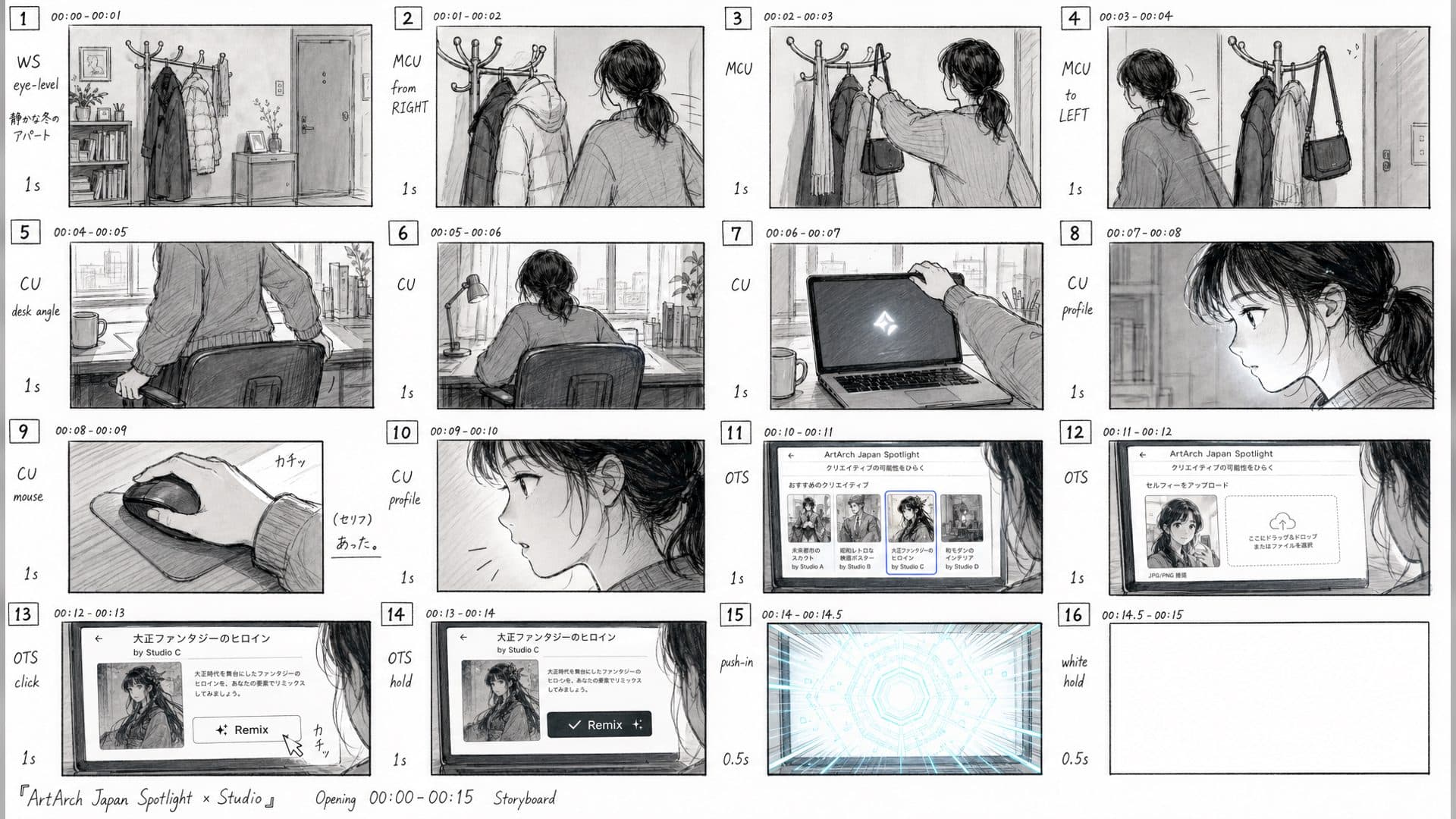
An interface transition is easy to overcomplicate. A storyboard can keep the transformation readable: show the real screen, the person's action, the activation moment, and the new world. The key is to separate interface truth from generated fantasy art.
Four beats make the transition clear
Begin with an over-the-shoulder laptop view. Show the creator selecting a work, uploading a selfie, and clicking Remix once. Then show a restrained activation light that motivates the cut into the fantasy setting. Do not ask a video model to invent detailed buttons or labels.
Use real UI references
Keep listing, upload, and action-panel screenshots as separate references. The storyboard can indicate where the UI sits, but real screenshots control screen geometry. This prevents the interface from drifting between panels.
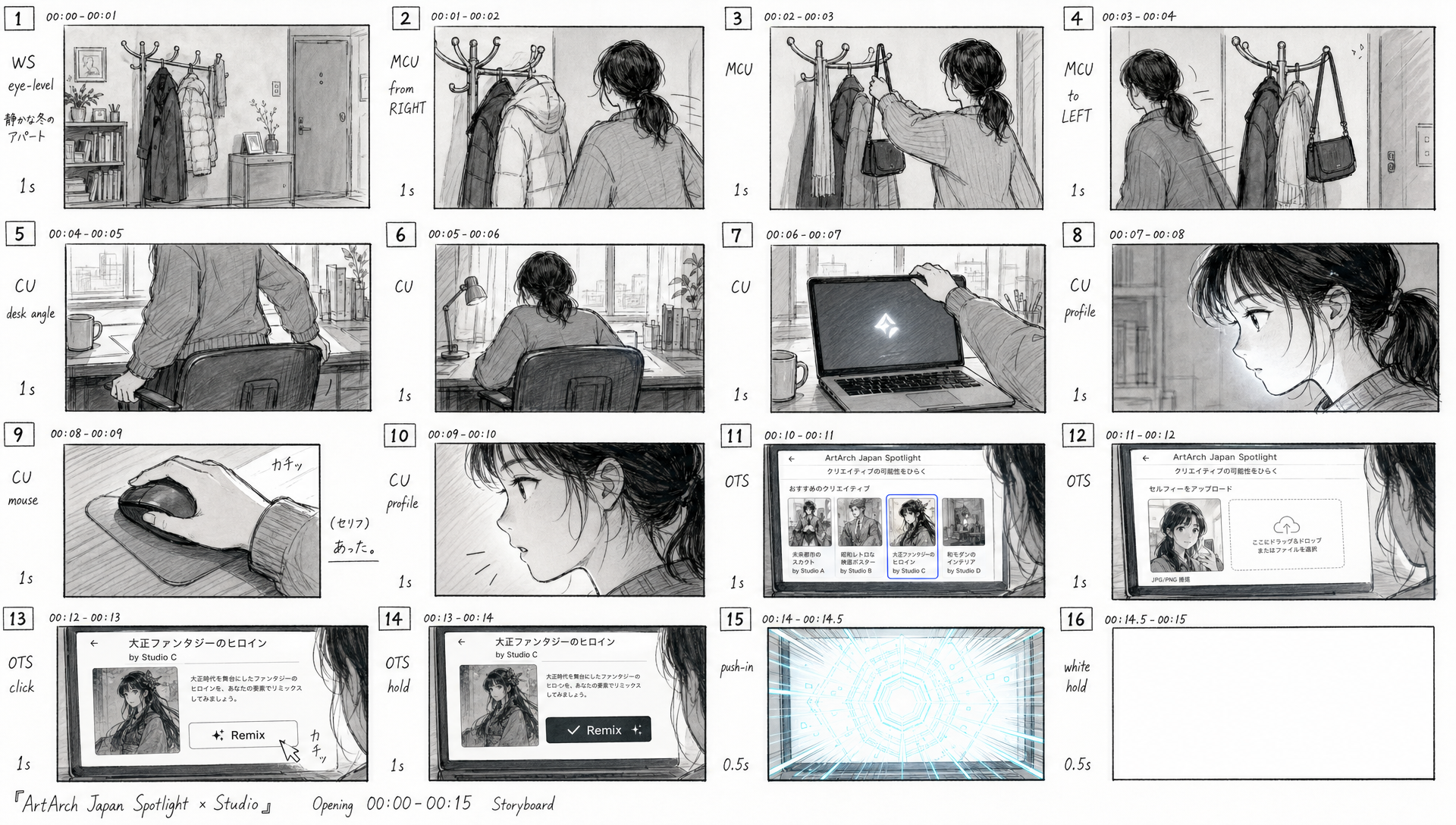
Move from plan to motion
Ask Codex to read back the screen reference order, the camera push-in, and the final white or light endpoint. Run a small test before building the entire fantasy sequence. The resulting video should make the user's action easy to follow even without explanatory text.
Keep the activation effect tied to the user's action. The light should begin after the click, expand along the screen axis, and end in a stable transition frame. This gives the editor a clear cut point and keeps the fantasy arrival from feeling like an unrelated overlay.
Frequently asked questions
Should an AI model redraw the interface?
Use a real UI reference or later compositing for exact interface details.
How many activation effects are needed?
One motivated activation beat is usually clearer than many unrelated flashes.
Can the fantasy world appear in the UI card?
Yes, when the card is a deliberate preview reference, but label its role and preserve the UI shell.
Use creative-agent to storyboard one understandable interface-to-fantasy transition.
Keep exploring
More in Creative Agent

Designing a Three-Scene AI Character State Machine
three-scene AI character state machine case study with saved ArtArch Studio media, prompt decisions, visible results, and practical production notes.

Extracting First and Last Frames to Plan AI Video Transitions
AI video transitions case study with saved ArtArch Studio media, prompt decisions, visible results, and practical production notes.
Fan-Dance-to-Idle AI Transition With a Clean Endpoint
fan-dance-to-idle AI transition case study with saved ArtArch Studio media, prompt decisions, visible results, and practical production notes.
An Idle-to-Fan-Dance AI Transition With the Prop as the Cue
idle-to-fan-dance AI transition case study with saved ArtArch Studio media, prompt decisions, visible results, and practical production notes.