

ArtArch 新闻中心
AI Video TechniquesHow to Use AI Video Shot Size Prompts to Show Character Psychology
Learn how AI video shot size prompts use loose medium shots, tight close-ups, and a motivated push-in to make character psychology visible.
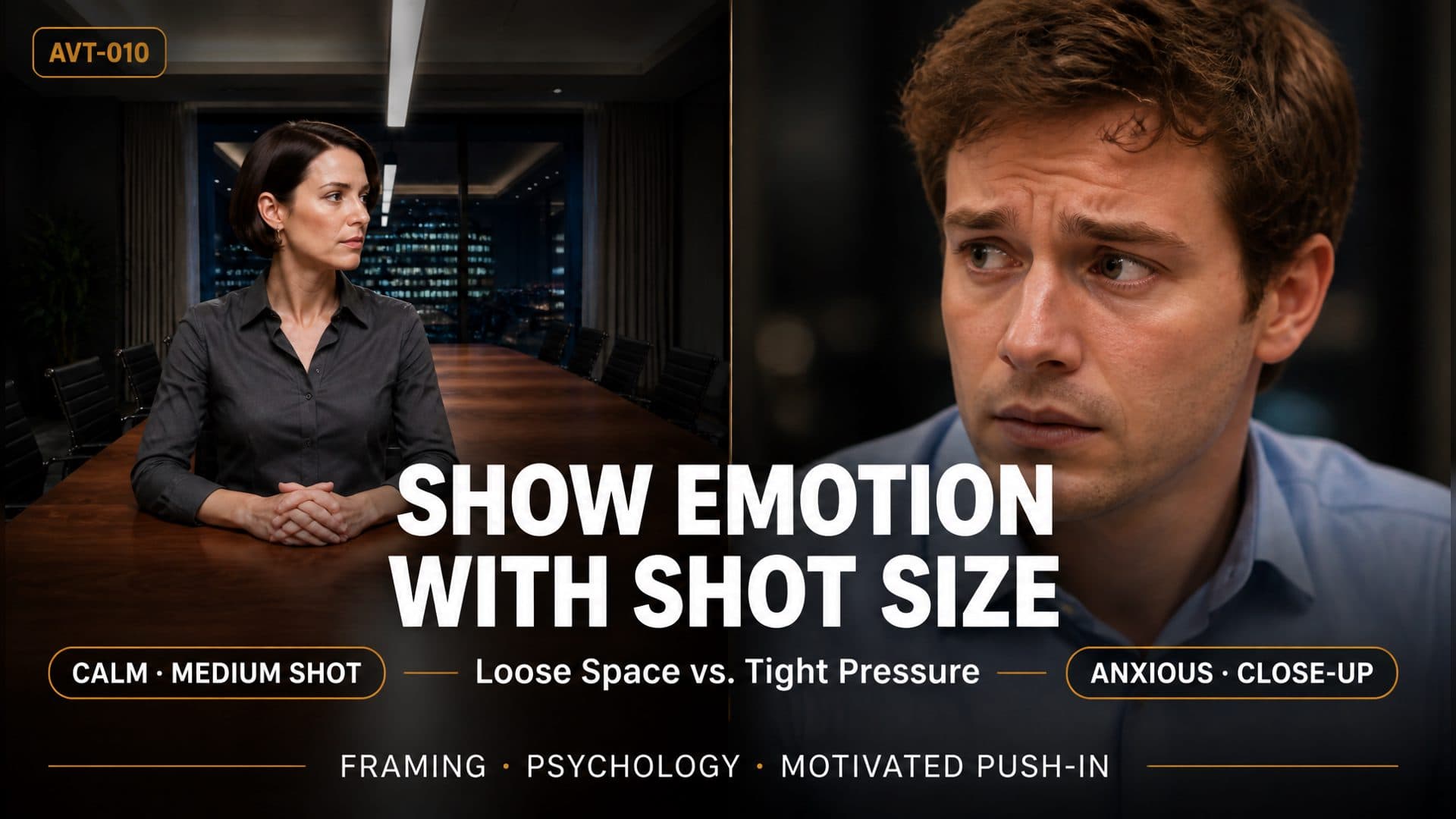
Provide a two-character reference and an empty office reference to create two versions of the same tense meeting. These AI video shot size prompts compare balanced dialogue coverage with an asymmetric plan: the composed supervisor receives room around her, while the anxious employee is placed in progressively tighter frames.
AVT-010 tests whether composition can carry a power difference before dialogue explains it. The control uses conventional alternating views. The technique version assigns each character a different amount of visual space and adds a gradual push toward the employee.
Open the AVT-010 experiment canvas on ArtArch.
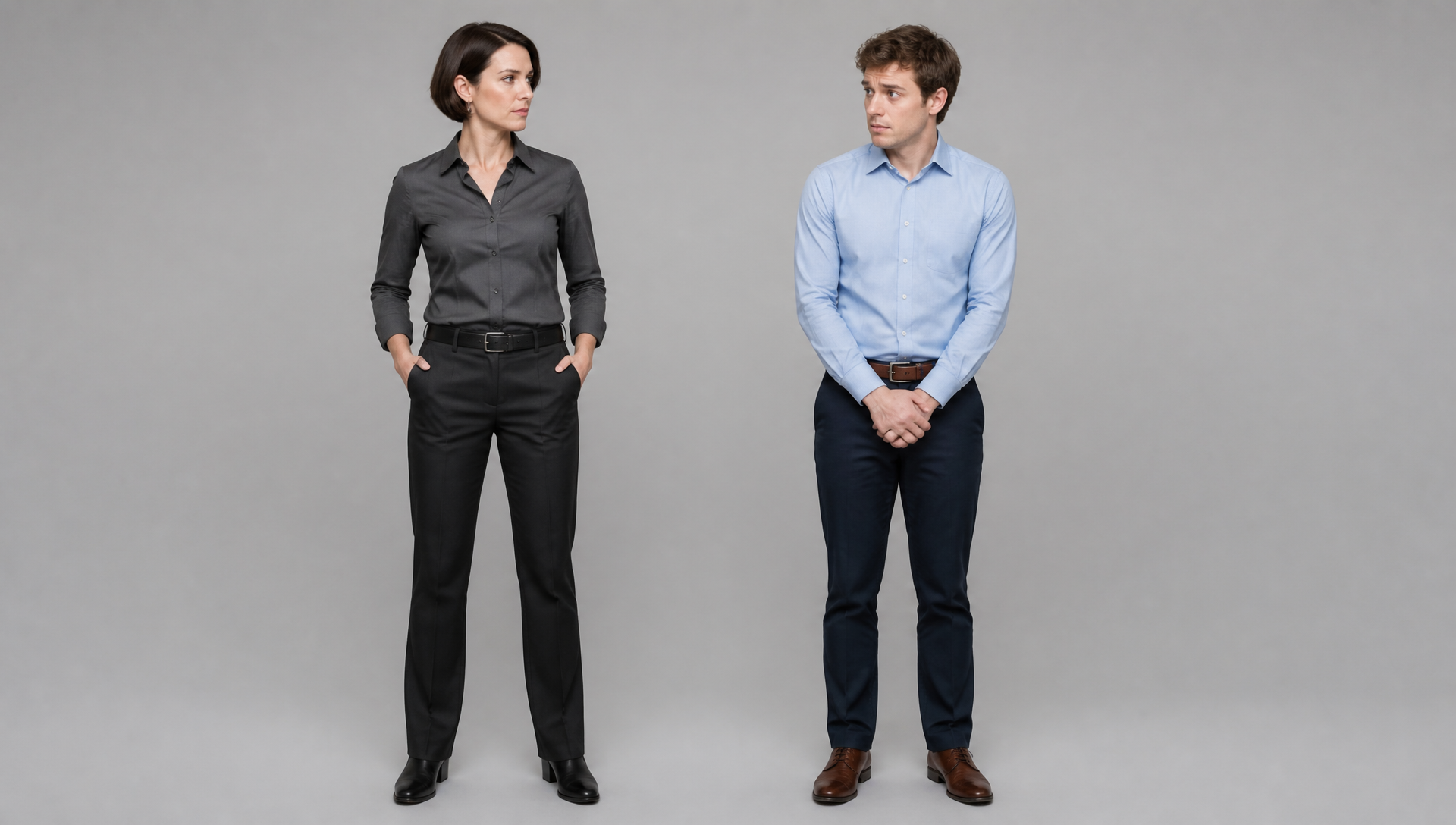
The character reference fixes the supervisor's dark gray shirt and composed presence alongside the employee's light blue shirt and more guarded posture.
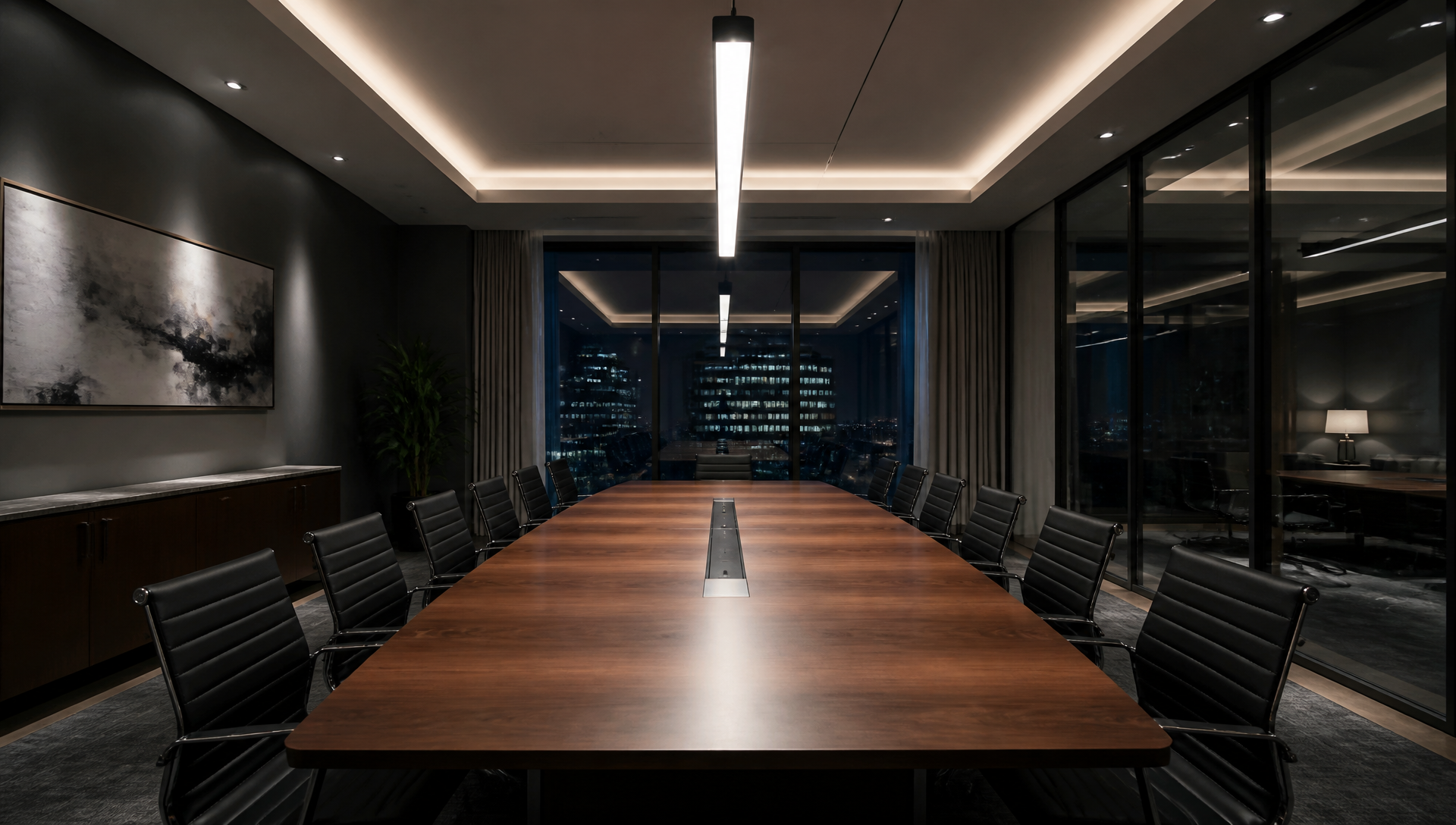
The empty location reference provides a long table, chairs, glass walls, and overhead lighting that can remain visible or disappear as the framing tightens.
The framing decision behind the scene
A dialogue scene can be clear and still feel emotionally neutral. Similar headroom, face size, and background space give both characters comparable visual weight. When the story places one person in control and the other under pressure, matching coverage may leave the hierarchy to facial acting alone.
AVT-010 turns that psychological difference into three camera decisions:
| Character state | Shot choice | What remains visible | Visual effect |
|---|---|---|---|
| Calm and in control | Loose medium shot | Upper body, hands, table, chairs, room depth | The character appears grounded in the setting |
| Anxious and observed | Tight close-up | Face, gaze, blink, breath, jaw | The surrounding room gives way to internal pressure |
| Pressure increasing | Slow push-in | Progressively less headroom and background | The emotional beat gains weight over time |
The useful contrast comes from assigning space according to dramatic position.
A group: conventional dialogue coverage
The control keeps the camera language broadly balanced:
The supervisor and young employee look across a conference table. Alternate between similar conventional close views. The supervisor remains composed while the employee appears nervous.
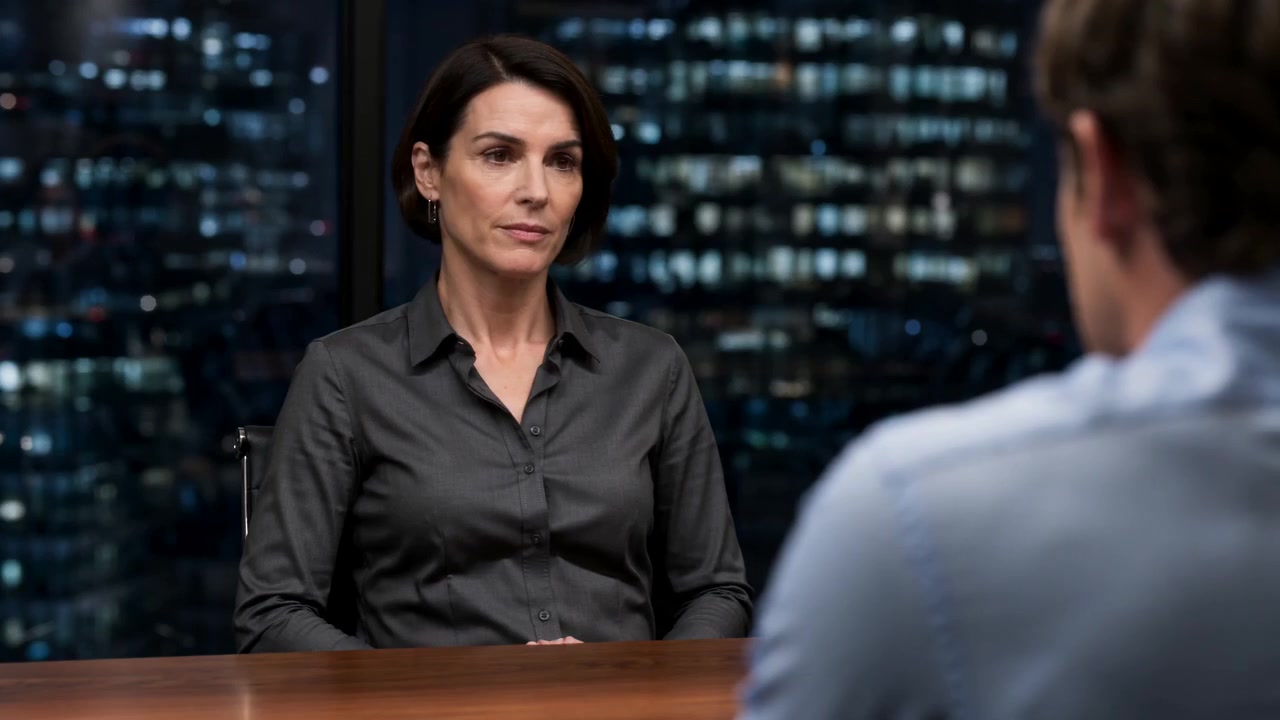
The opening establishes one side of the meeting with familiar close coverage.
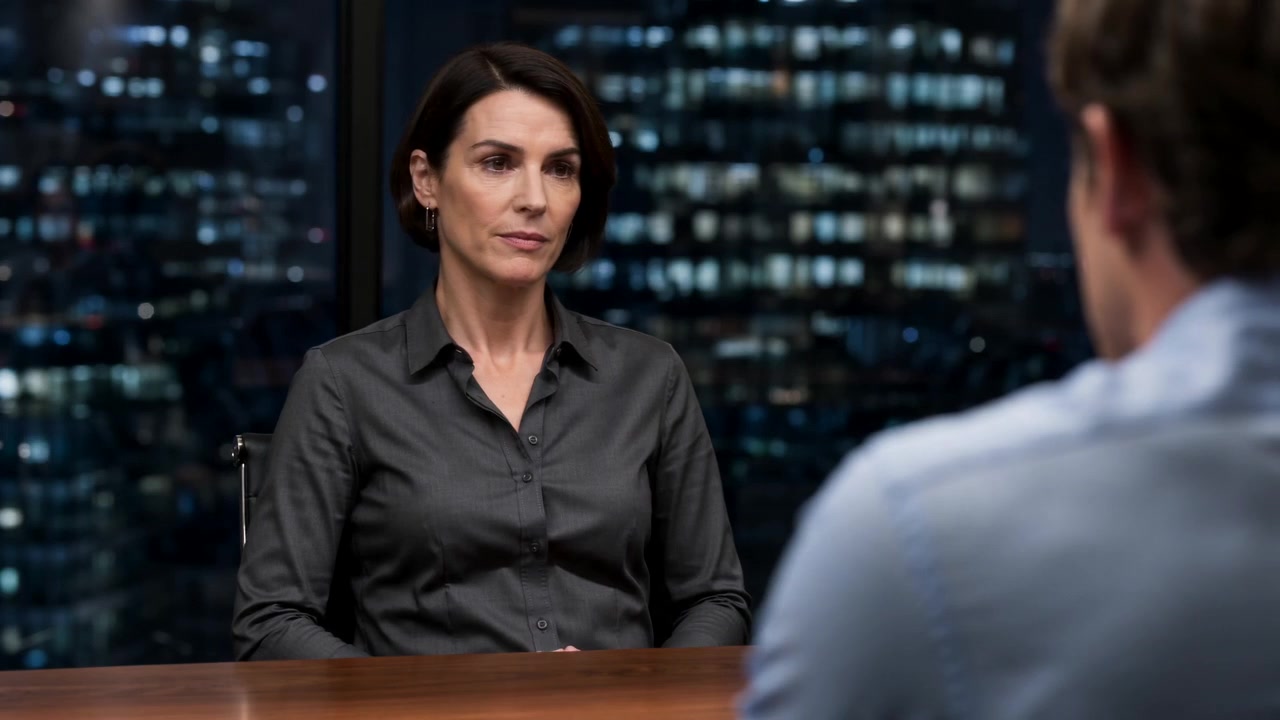
The later frame changes the speaker-side view while keeping the overall camera language conventional.
<video controls playsinline preload="metadata" src="https://d3ohi5svx56rr5.cloudfront.net/artarchtask/d175c4b7-4cc0-4a3c-a8e3-b46d2a895f17/url_4ff17c51d9716697c9a9b25c8bf6bf0a.mp4"></video>
A group: balanced dialogue coverage used as the control.
B group: give each character a different amount of space
The technique prompt links shot size to psychological position:
Begin with the supervisor in a loose medium shot. Keep her upper body, the tabletop, chairs, and office depth visible. Cut to the employee in a tight close-up with less background and tighter headroom. Stay with him and make a slow, small push toward his eyes as the pressure increases.
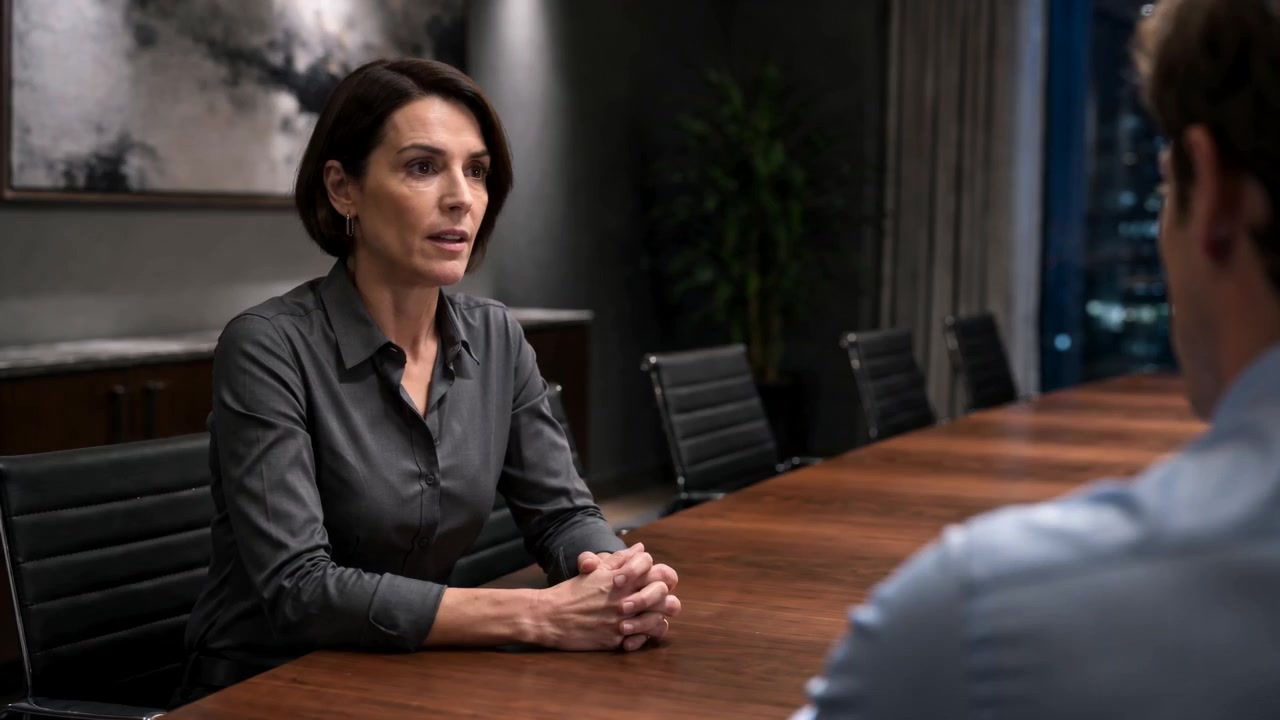
The opening retains more environment, allowing posture and the relationship to the meeting room to remain part of the image.
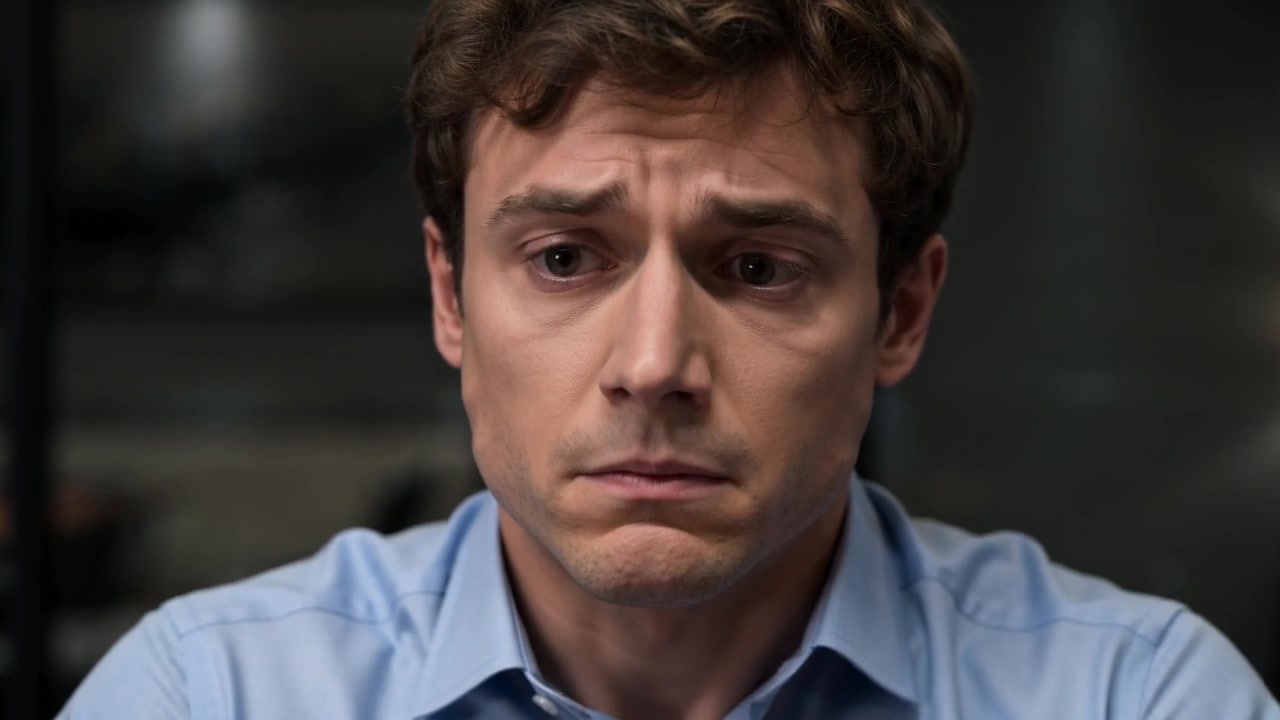
The tighter middle view reduces room context and shifts attention toward facial behavior.
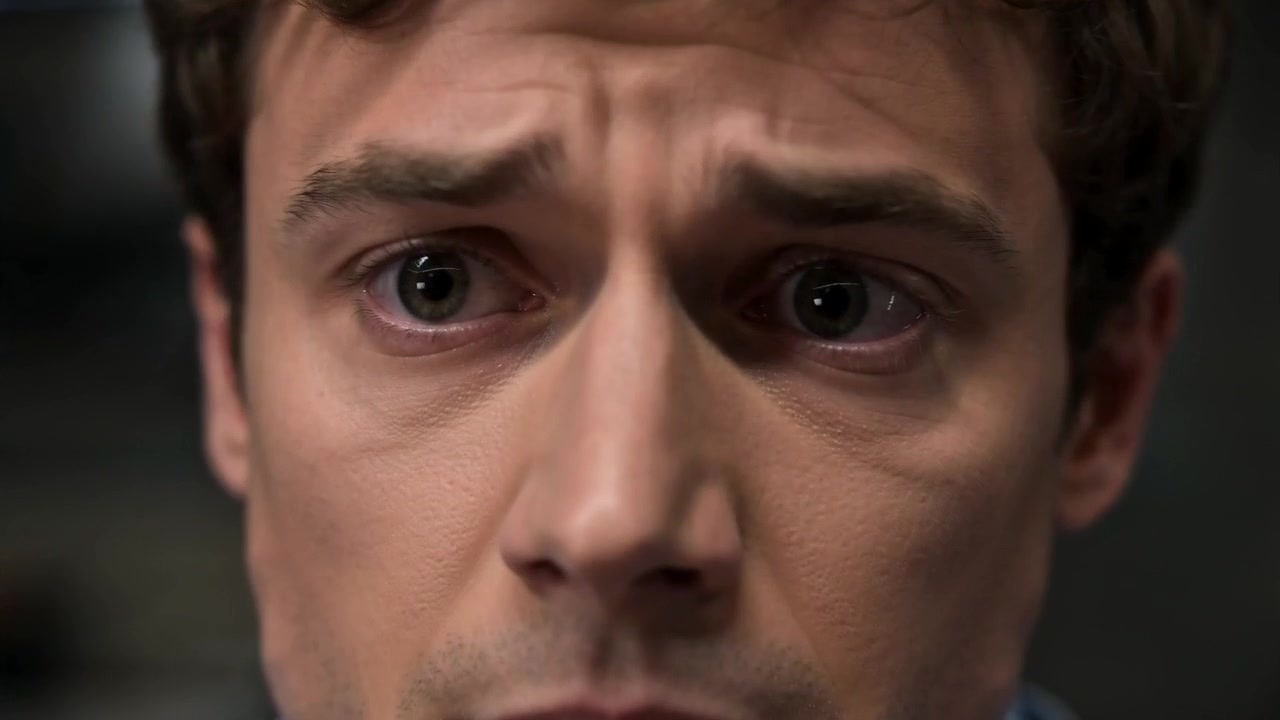
The late frame provides the strongest available evidence for how the sequence compresses visual space around the employee.
<video controls playsinline preload="metadata" src="https://d3ohi5svx56rr5.cloudfront.net/artarchtask/d175c4b7-4cc0-4a3c-a8e3-b46d2a895f17/url_bf2cb69cf49c4befa156d8af9feed1fe.mp4"></video>
B group: asymmetric psychological framing with a tighter progression.
The prompt was planned for eight seconds. The current files provide reliable article evidence through about 4.8 seconds, so the comparison above is limited to the visible shift from room context toward tighter facial coverage in that interval.
Why a loose medium shot can communicate control
A loose medium shot keeps posture and environment in the same image. The viewer can read where the hands rest, how the shoulders settle, and how the person relates to the furniture and architecture.
For a character controlling a difficult conversation, use stable anchors such as the conference table, chair backs, a doorway, or the depth of the room. Pair that composition with even breathing, a steady gaze, relaxed shoulders, and minimal camera movement.
Show Character A in a loose medium shot.
Keep the upper body, hands, tabletop, nearby chairs, and room depth visible.
Use a stable seated posture, relaxed shoulders, and a steady gaze.
Keep the camera still.
The space around the character becomes evidence of composure.
Why a tight close-up increases pressure
A close-up removes competing information. As the conference room disappears, the employee's eyes, breathing, and jaw become the main evidence in the scene.
Choose one or two restrained performance signals. A quick blink, shallow breath, slight jaw tension, or brief break in gaze gives the close-up something precise to reveal.
Cut to Character B in a tight facial close-up.
Reduce visible background and tighten the space around the forehead and chin.
Emphasize a quick blink and slight jaw tension.
Preserve the established gaze direction.
The composition and performance now describe the same psychological state.
Motivate the push-in with a dramatic beat
A push-in carries more weight when an event triggers it. A pause after a difficult question, a document placed on the table, a contradiction, or a delayed answer can mark the moment when pressure increases.
Keep the move small and continuous. Start from a readable full-face close-up, advance gradually, and settle on the eyes or another meaningful detail. The viewer should feel the frame tightening over time.
After the supervisor pauses, remain on Character B.
Begin a very slow, subtle push-in as the pressure rises.
Move from a full-face close-up toward the eyes.
End on a stable frame and hold the reaction.
A reusable psychological framing prompt
Create a dialogue reaction using two character references and one empty location reference. Keep identity, wardrobe, room layout, screen direction, and lighting consistent.

Composed character:
Show Character A in a loose medium shot. Keep the upper body, hands, table surface, chairs, and room depth visible. Use relaxed shoulders, a steady gaze, even breathing, and a stable posture. Keep the camera still.

Pressured character:
Cut to Character B in a tight close-up. Reduce the visible background and tighten the space around the face. Emphasize one or two restrained details such as blinking, shallow breathing, eye movement, or slight jaw tension. Preserve gaze direction.

Escalation:
Stay with Character B. After a meaningful pause, begin a very slow push-in. Progress from the full face toward the eyes and finish in a settled frame.
Replace the conference-room details with anchors from your location. A diner booth, courtroom rail, kitchen island, hospital doorway, or sales desk can perform the same compositional role.
Where this technique helps
A performance review can keep the manager connected to the table while the employee moves into a tighter reaction. A negotiation can leave documents and furniture around the person controlling the offer, then isolate the other party when the terms become costly. An investigation can hold the interviewer in a stable medium shot and push toward the subject after a contradiction. A quiet relationship scene can use surrounding space for one person and visual compression for the other as silence deepens.
Review face size, headroom, visible body area, and the number of environmental anchors in each shot. Then compare the beginning and end of the push. The framing change should support the acting while gaze direction continues to connect both sides of the conversation.
Frequently asked questions
What shot size works well for an anxious AI video character?
A tight close-up makes gaze, blinking, breathing, and jaw tension easier to read. A slow push toward the eyes can show pressure increasing after a clear dramatic trigger.
How should I frame the character who controls the conversation?
Use a loose medium shot that keeps posture, hands, and meaningful parts of the setting visible. Stable placement and surrounding space support a composed screen presence.
Do both sides of a dialogue need matching coverage?
Matching coverage creates visual balance. Different shot sizes can make confidence, authority, or emotional pressure visible when each composition follows the character's state.
What should trigger an emotional push-in?
Tie it to a pause, difficult question, revealed document, contradiction, or decision. Begin slowly and settle on one meaningful facial detail.
Open AVT-010 in ArtArch and adapt the shot-size progression to your own dialogue scene.
继续探索
更多 AI Video Techniques 内容
Motivated Cut AI Video Continuity: Change the Shot for a Reason
Learn how a visible action trigger, clear shot-size change, and locked screen direction create more intentional same-scene AI video edits.
Deep Depth of Field AI Video: Keep Every Story Layer Readable
Learn how deep depth of field AI video prompts keep foreground tools, central action, and distant location cues readable in one layered shot.
Medium Depth of Field AI Video: Balance Subject and Setting
Learn how medium depth of field AI video prompts keep hands and active objects readable while preserving recognizable environmental context.
AI Video Character Reference Framing: Match Portraits to Landscape Shots
Prepare vertical character portraits for landscape AI video by matching aspect ratio, body scale, headroom, floor space, and movement room before generation.