
ArtArch 新闻中心
AI Video TechniquesDeep Depth of Field AI Video: Keep Every Story Layer Readable
Learn how deep depth of field AI video prompts keep foreground tools, central action, and distant location cues readable in one layered shot.
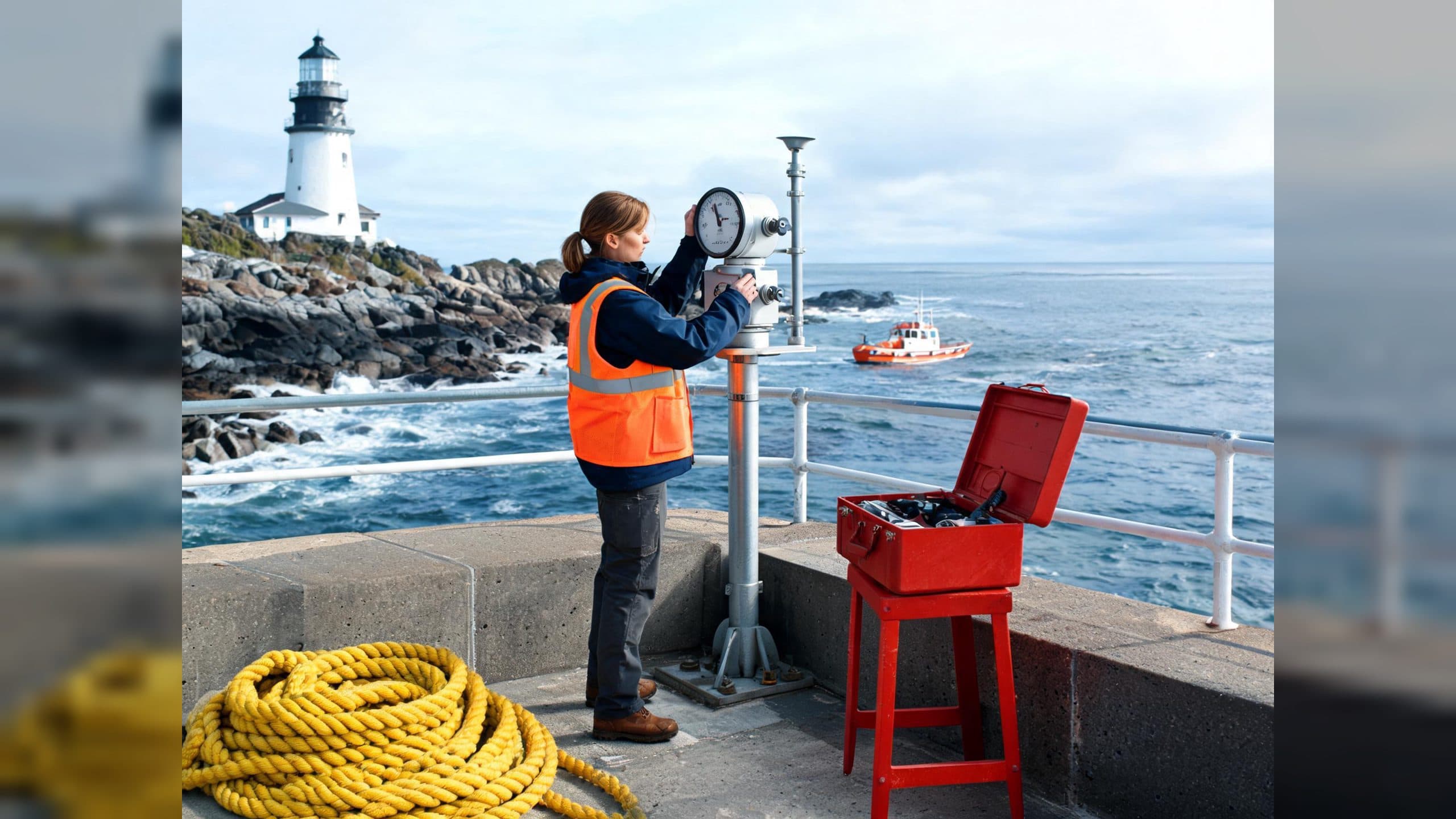
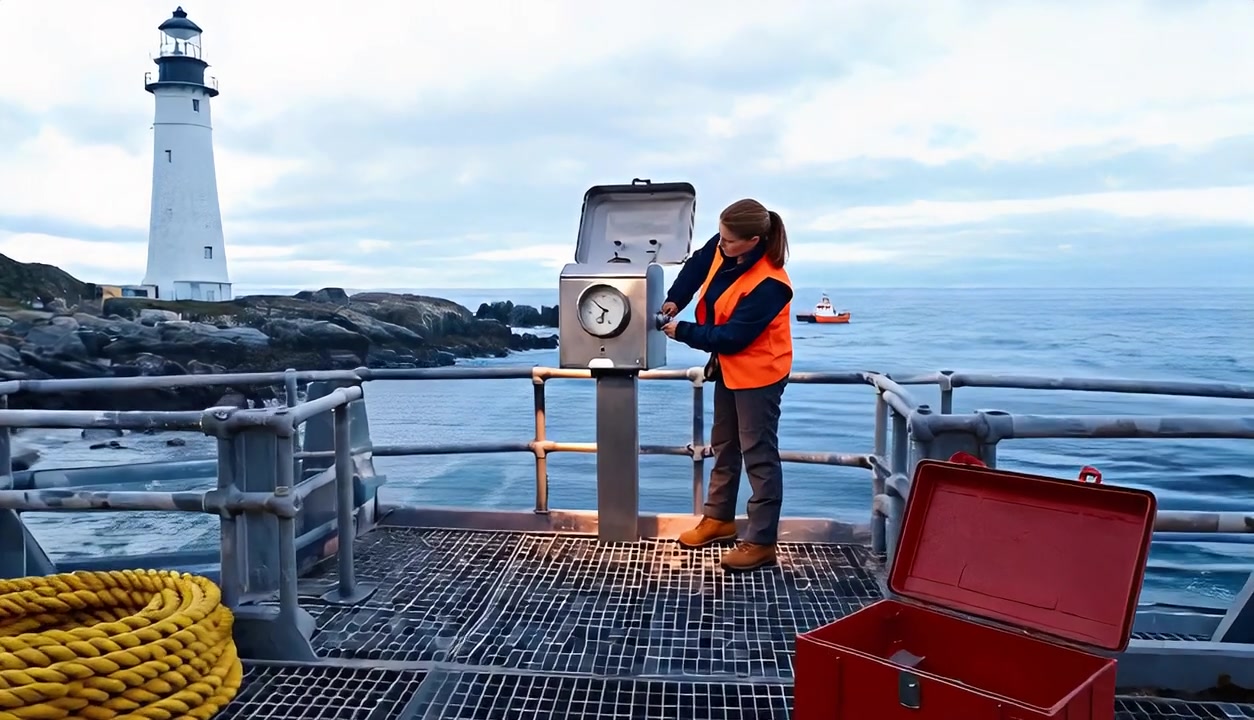
Use a character reference and a layered environment reference to create a deep depth of field AI video where foreground objects, the main action, and distant location cues remain readable together. In a coastal maintenance scene, a yellow rope and red toolbox frame the foreground, a technician operates a weather instrument in the middle, and a lighthouse with a rescue boat defines the distance.
Plan depth as story information
Deep focus is most useful when several distances answer different viewer questions. The foreground can show what tools are available. The middle distance can carry the action. The background can establish place, scale, or an approaching event.
For the lighthouse-platform scene, each layer had one clear job:
- Foreground: a coiled yellow marine rope and an open red toolbox establish hands-on maintenance work.
- Midground: the technician, weather instrument, gauge, and side knob carry the active inspection.
- Background: the white lighthouse, rocky shoreline, ocean, and orange-and-white rescue boat identify the coastal location.
This division turns a broad request for a detailed scene into a reviewable visual plan.
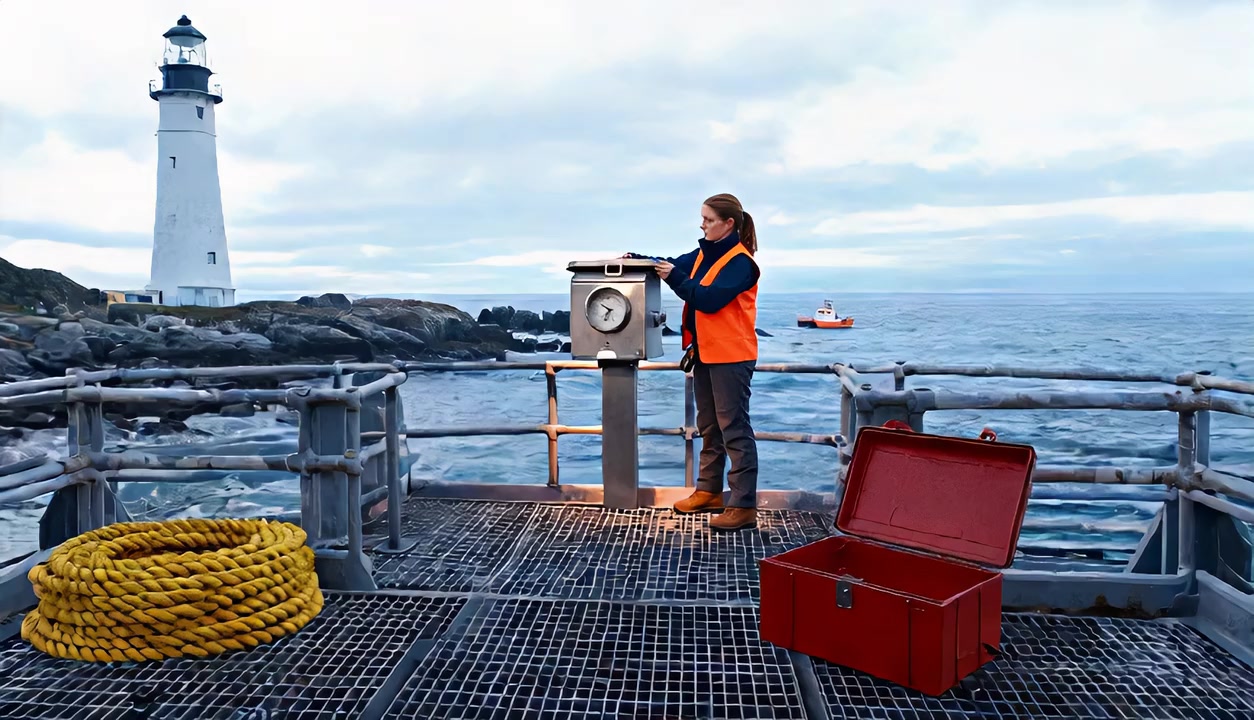
The opening frame places useful information at three distinct distances while keeping the instrument inspection central.
Write one requirement for each distance
A practical deep-depth prompt names the objects that must survive at every plane. Use concrete visual checks instead of a general request for everything to be sharp.
The working instruction for this scene asked for readable rope fibers and toolbox edges in the near foreground, a sharply readable technician, hands, gauge, and fixing knob in the middle, and recognizable shape, color, and position for the lighthouse, rocks, and rescue boat in the distance.
The wording matters because “deep depth of field” describes an overall intention, while the object list defines what the finished shot needs to preserve. It also creates a direct checklist for reviewing the opening, midpoint, and final image.
Keep the main action dominant without blur
When every distance remains visible, composition and movement need to carry the hierarchy. Place the active subject near a strong visual center, give the hands a clear contrast against the work surface, and let foreground objects frame the scene instead of covering the action.
Color can reinforce the same structure. The orange safety vest and red toolbox draw the eye toward the work area, while the white lighthouse and small orange rescue boat remain readable location anchors. The technician's movement at the metal instrument provides the strongest changing signal, so attention stays in the middle even while the wider environment remains visible.
继续探索
更多 AI Video Techniques 内容
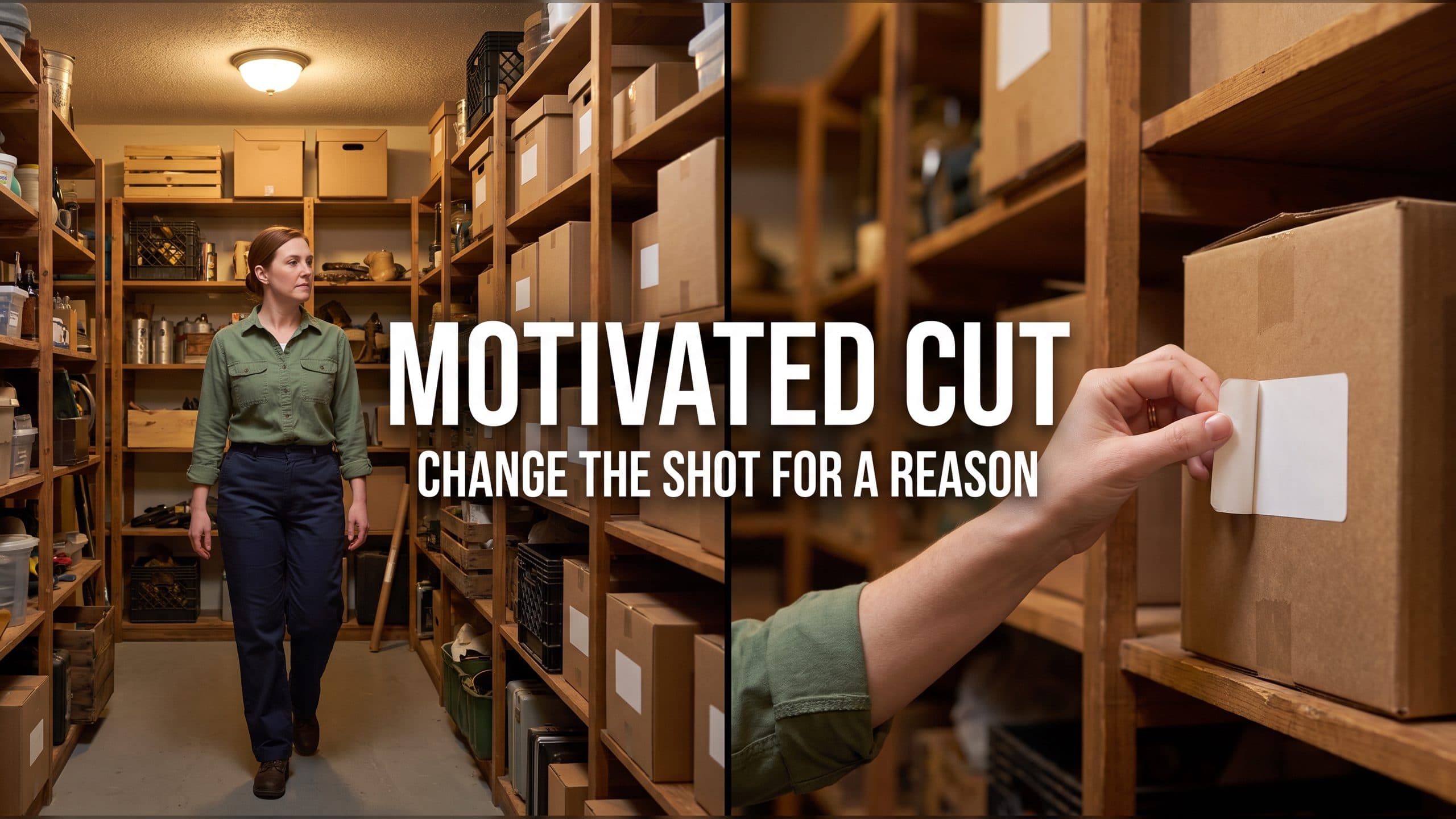
Motivated Cut AI Video Continuity: Change the Shot for a Reason
Learn how a visible action trigger, clear shot-size change, and locked screen direction create more intentional same-scene AI video edits.

Medium Depth of Field AI Video: Balance Subject and Setting
Learn how medium depth of field AI video prompts keep hands and active objects readable while preserving recognizable environmental context.

AI Video Character Reference Framing: Match Portraits to Landscape Shots
Prepare vertical character portraits for landscape AI video by matching aspect ratio, body scale, headroom, floor space, and movement room before generation.

AI Video Action Continuity Prompt: Match Contact Points Across Segments
Write an AI video action continuity prompt that matches hand contact, prop position, body direction, and movement across connected video segments.