

ArtArch 新闻中心
AI Video TechniquesAI Storyboard Style Consistency: Use Multiple Style References Across Shots
Improve AI storyboard style consistency with aligned visual references for texture, palette, contours, and repeatable art direction across shots.
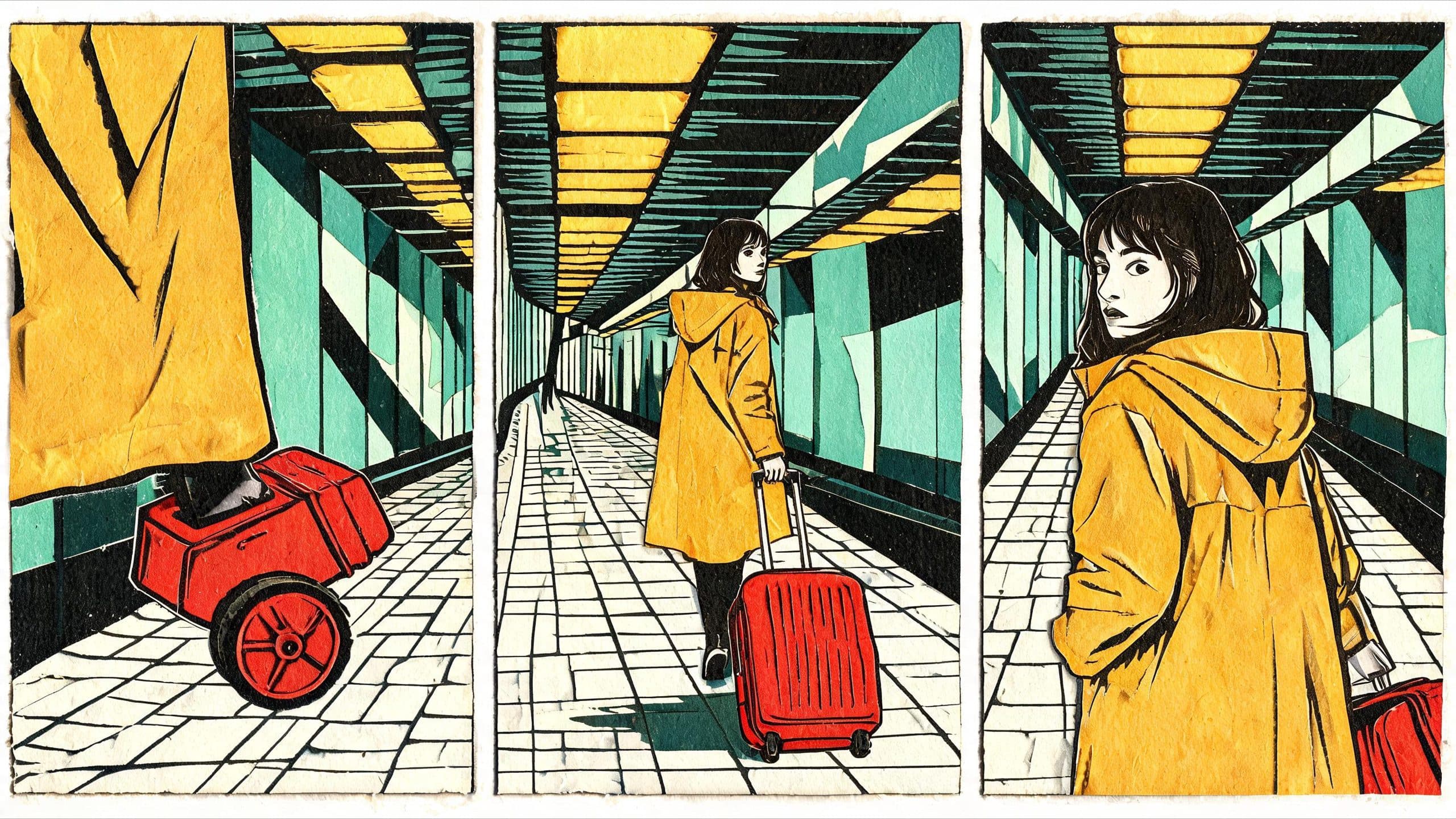
AI storyboard style consistency improves when several aligned reference images define one visual system across every shot. Provide a character reference, an environment reference, and two or three style references that share the same materials, palette, contour treatment, and lighting logic. The resulting sequence can move from an object close-up to a walking shot and a character reaction while preserving the same crafted-paper world.
The useful distinction is responsibility. Character references preserve identity and wardrobe. Environment references preserve location and spatial materials. Style references define how the whole sequence should look: paper fibers, carved black contours, teal shadows, mustard-yellow light, and restrained coral accents. Keeping these jobs separate makes it easier to diagnose whether a later shot has changed character, place, or visual language.
Build one style family before creating the sequence
Choose style references for agreement, not variety. A strong set repeats the same visual decisions from image to image:
- one dominant material treatment, such as fibrous cut paper;
- one contour language, such as bold linocut edges;
- one controlled palette with repeatable shadow, light, and accent colors;
- similar detail density and shape simplification;
- compatible lighting and contrast.
Three individually attractive images can still form a weak style set when one is glossy 3D, one is watercolor, and one is graphic collage. A useful set feels like three views from the same production, even when the subjects and compositions differ.
Give every reference a single job
Start with one approved character image that clearly shows the face, hair, body proportions, and wardrobe. Add one environment image for the room layout, architecture, surfaces, and practical light sources. Then add the style family strictly for texture, palette, edge treatment, and graphic simplification.
A compact direction can read like this:
Character reference: preserve identity, hair, body type, and wardrobe.
Environment reference: preserve the corridor layout, tiled walls, doors, and ceiling lights.
Style references: apply fibrous paper texture, carved black contours, teal shadow shapes, mustard-yellow light, and restrained coral accents across every shot.

Create three connected moments: a red suitcase wheel enters the corridor, the traveler walks through frame, then she pauses and looks back. Preserve the same character, location, palette, material treatment, and contour language throughout the sequence.
This structure lets the action and framing change while the style system remains fixed.
What the comparison showed
In one six-second Seedance 2.0 comparison, both versions used the same character, corridor, three-shot action, written style direction, model, duration, aspect ratio, and resolution. The control used the written style direction alone. The technique version added three references built around the same cut-paper and linocut visual language.
The control kept the woman, red suitcase, and corridor recognizable, but its beginning, middle, and ending images remained largely realistic or CG-photographic. Paper fibers, carved edges, and the teal-coral palette appeared weakly or inconsistently.
The multi-reference version carried paper-textured walls, black contours, teal geometry, mustard-yellow lights, and coral line accents through all three sampled moments. The strongest improvement appeared in the environment and palette. The woman remained partly photorealistic, so the style was more consistent across the setting than across every part of the subject.
This result supports a practical production rule: aligned style references can strengthen the visual system that connects several shots, while subject styling still deserves its own review.
Review style by category, not by impression
After generation, inspect the beginning, middle, and end of the sequence. Score the same categories at each point:
- Material: Do walls, props, clothing, and shadows retain the intended paper, paint, ink, or fabric treatment?
- Contours: Do edge thickness, carved marks, and shape simplification remain compatible?
- Palette: Do the same dominant, shadow, light, and accent colors continue across shots?
- Subject coverage: Does the character receive the same styling strength as the background?
- Continuity: Do identity, wardrobe, props, and location remain stable while the framing changes?
This category review reveals partial success. A sequence can hold its palette and environment treatment while the face drifts toward realism. That is more actionable than labeling the whole result simply consistent or inconsistent.
Where this method is useful
An illustrated short film
An animator with an approved character sheet and several paper-collage mood frames can use one reference family across establishing, action, and reaction shots. The repeated texture and contour language makes separate moments read as one film.
A branded campaign sequence
A creative team preparing several product scenes can select references that share the campaign palette, surface treatment, and graphic shapes. Product position and camera angle may change while the visual identity stays recognizable.
A serialized character project
A creator producing recurring episodes can retain a stable style family alongside the character and location references. New actions and settings then begin from documented visual rules instead of a broad style adjective.
A short production workflow
- Approve the character and environment independently.
- Select two or three style references with matching materials, contours, palette, and lighting.
- Apply the same style family to every shot, then review start, middle, and end by material, contour, palette, subject coverage, and continuity.
When one category drifts, adjust the references that control that category. If the background is consistent but the character remains realistic, strengthen the style evidence around figures and clothing while keeping the approved identity reference unchanged.
Frequently asked questions
How many style references should I use for an AI storyboard?
Two or three aligned images are a practical starting set. Each image should reinforce the same material, contour, palette, and lighting decisions.
What makes style references compatible?
Compatible references share a recognizable visual grammar: similar edge treatment, shape simplification, texture, color roles, contrast, and detail density.
Should a style reference also define the character?
Use a dedicated character reference for identity, hair, proportions, and wardrobe. Let the style family control rendering qualities such as texture, palette, contours, and graphic treatment.
How do I check style consistency across several shots?
Compare the beginning, middle, and end for material, contours, palette, subject coverage, character continuity, and environment continuity. Review each category separately so partial drift is easy to locate.
Build your next multi-reference sequence in ArtArch Studio.
继续探索
更多 AI Video Techniques 内容
Motivated Cut AI Video Continuity: Change the Shot for a Reason
Learn how a visible action trigger, clear shot-size change, and locked screen direction create more intentional same-scene AI video edits.

Deep Depth of Field AI Video: Keep Every Story Layer Readable
Learn how deep depth of field AI video prompts keep foreground tools, central action, and distant location cues readable in one layered shot.

Medium Depth of Field AI Video: Balance Subject and Setting
Learn how medium depth of field AI video prompts keep hands and active objects readable while preserving recognizable environmental context.
AI Video Character Reference Framing: Match Portraits to Landscape Shots
Prepare vertical character portraits for landscape AI video by matching aspect ratio, body scale, headroom, floor space, and movement room before generation.