

ArtArch Newsroom
Producer's NoteOne Point Perspective AI Image Prompt for Stronger Depth
Write a one point perspective AI image prompt with converging structural lines and a clear viewing direction to create stronger spatial depth.
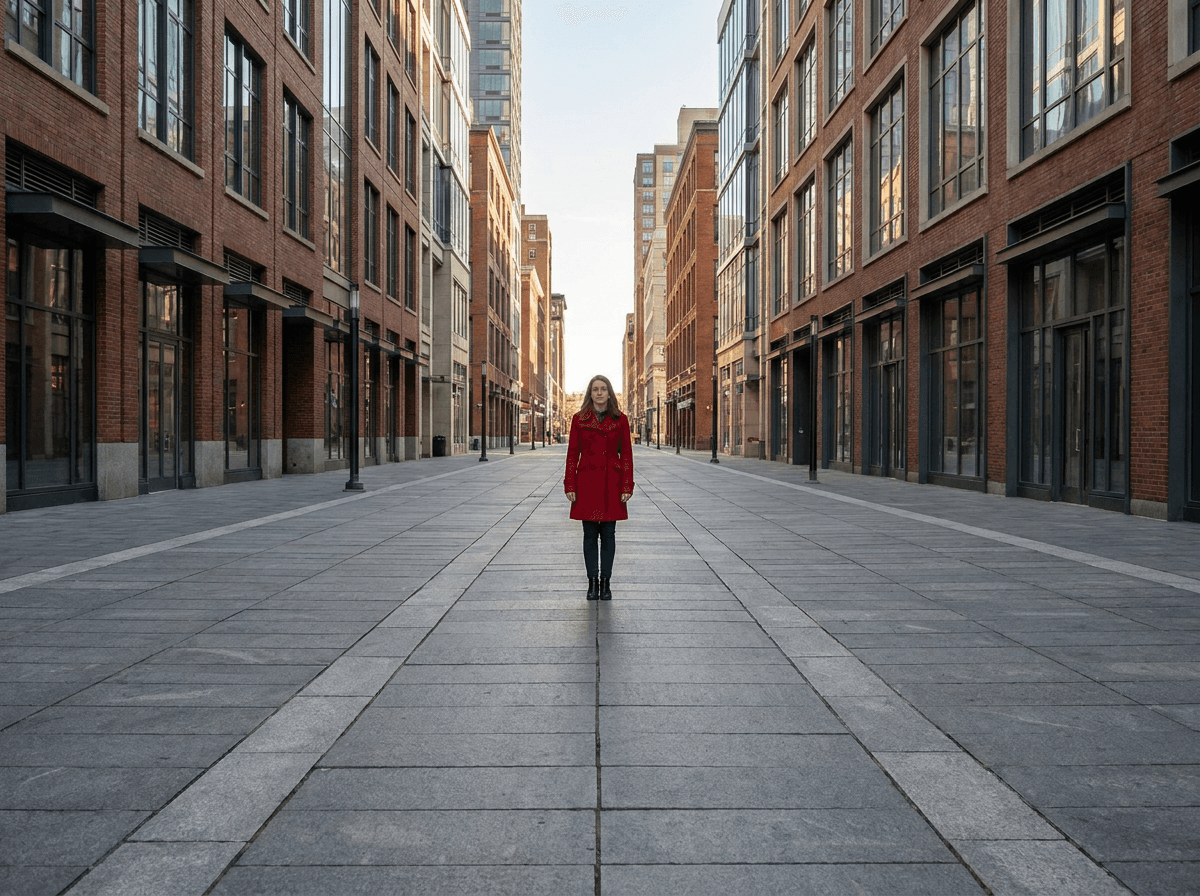
Provide a street or interior reference and use a one point perspective AI image prompt to create a scene with a clearer viewing direction and stronger spatial depth. Describe where structural lines converge and how the environment extends along the viewer's line of sight, while keeping the subject, density, and scale fixed.
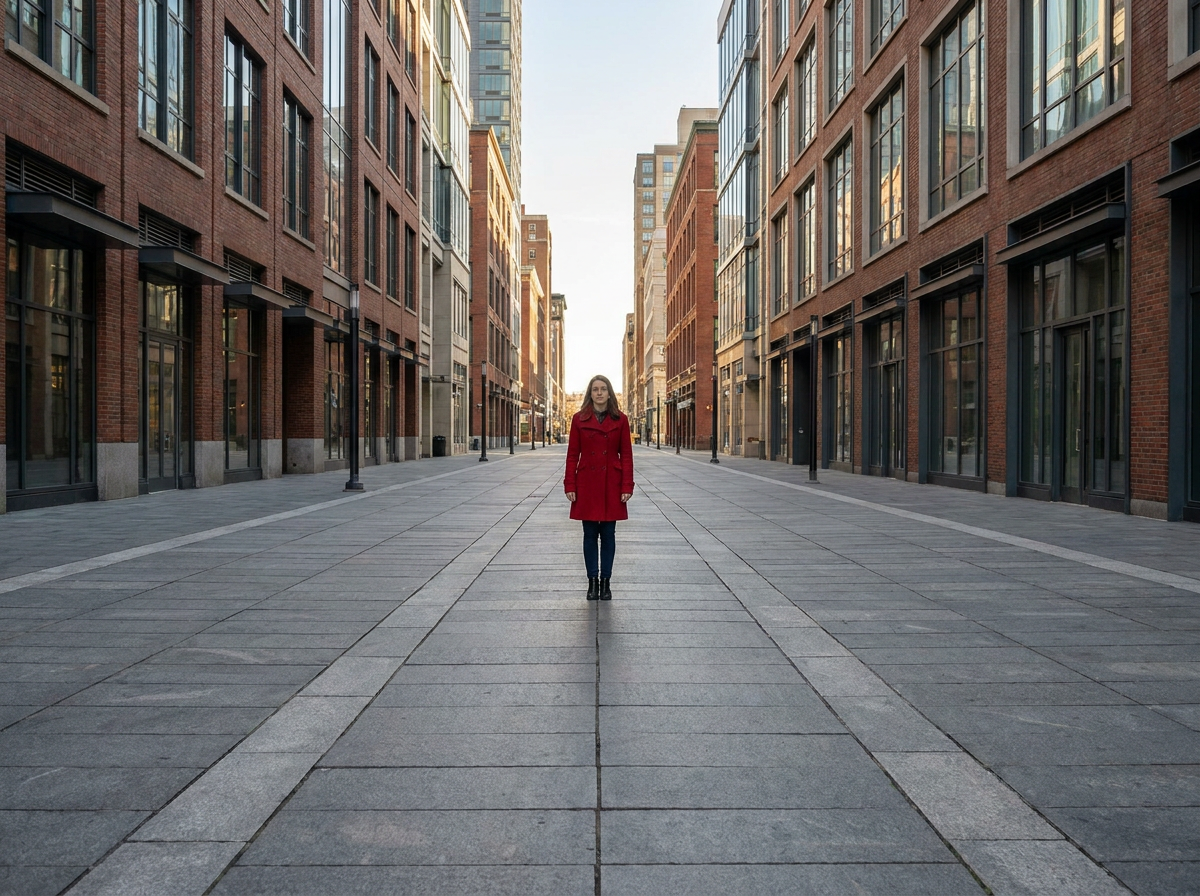
Building facades and pavement seams guide the eye toward one distant vanishing point.
Use direction as the single control
Perspective instructions become easier to evaluate when they control one spatial property at a time. Direction words describe where the scene extends. Density words describe how elements accumulate across distance. Scale words describe how large nearby and distant objects appear.
For a directional test, keep density and scale unchanged. Identify the major structural lines already present in the scene, then give them one shared destination. Streets, corridors, platforms, bridges, and long interiors work well because their edges provide visible guides.
Name the lines and their destination
A practical prompt specifies both the geometry and the viewing direction:
Preserve the subject, eye-level camera, lighting, object density, and scale.
Make the major building edges and pavement seams converge toward one distant
vanishing point. Extend the street strongly along the viewer's line of sight.
Keep the architecture photorealistic and geometrically stable.
The first sentence locks the comparison. The second identifies the lines that carry perspective. The third establishes directional extension. The final sentence protects the architectural finish.
Generic phrases such as "more cinematic depth" leave several visual decisions open. Naming facades, pavement seams, ceiling beams, rails, or wall edges gives the composition a concrete directional structure.
A three-step creation setup
- Choose a reference with visible parallel edges and an unobstructed path into the distance.
- Select one vanishing direction and name the structural lines that should converge toward it.
- Keep the subject, camera height, element density, scale, lighting, and output format unchanged.
Centering the subject near the vanishing direction creates a formal, graphic composition. Moving the subject slightly to one side keeps the depth cue while leaving the destination visible. In either arrangement, preserve enough foreground pavement or floor to show the convergence.
What the controlled comparison showed
One Nanobanana Pro comparison used the same American pedestrian-street reference, fictional white American woman, model, seed, and output settings. The technique version added only the single-vanishing-point direction sentence.
Both outputs were visually identical in subject placement, building geometry, pavement convergence, and overall composition. The shared reference already contained a strong centered one-point perspective, creating a strong baseline that left no additional visible separation for the direction words in this run.
This observation makes the input choice part of the method. Direction words carry more diagnostic value when the starting reference has weak or ambiguous extension. A reference with an established vanishing point can already supply the geometry the prompt is asking for.
Where directional perspective helps
An architectural creator can strengthen the reading of a lobby, gallery, or corridor by aligning ceiling tracks and floor joints. A fashion creator can place a model on a long street and use facades and paving lines to frame the silhouette. A narrative artist can direct attention toward a distant doorway, vehicle, or approaching character.
Product environments can use shelf edges or display tables to lead toward a featured object. Travel images can use roads, bridges, railings, and platform lines to give a destination more visual importance.
Frequently asked questions
Which scenes show one point perspective most clearly?
Straight streets, corridors, train platforms, bridges, tunnels, galleries, and long rooms provide several structural lines that can share one destination.
Which lines should be named in the prompt?
Use the dominant visible structures: pavement seams, curb edges, building facades, ceiling beams, wall joints, rails, or rows of lights.
Should density and scale be changed at the same time?
Keep them fixed during a directional test so the visible change can be attributed to the vanishing direction.
How should a reference image be selected?
Choose a scene with readable geometry. Use a weaker or less organized depth pattern when the goal is to test whether the direction sentence produces a visible change.
Click the template card on this page, enter the experience page, and try the template.
Keep creating
Explore the idea, then make it yours.
Discover more creative workflows in Spotlight, or open ArtArch Studio to start creating now.
Keep exploring
More in Producer's Note
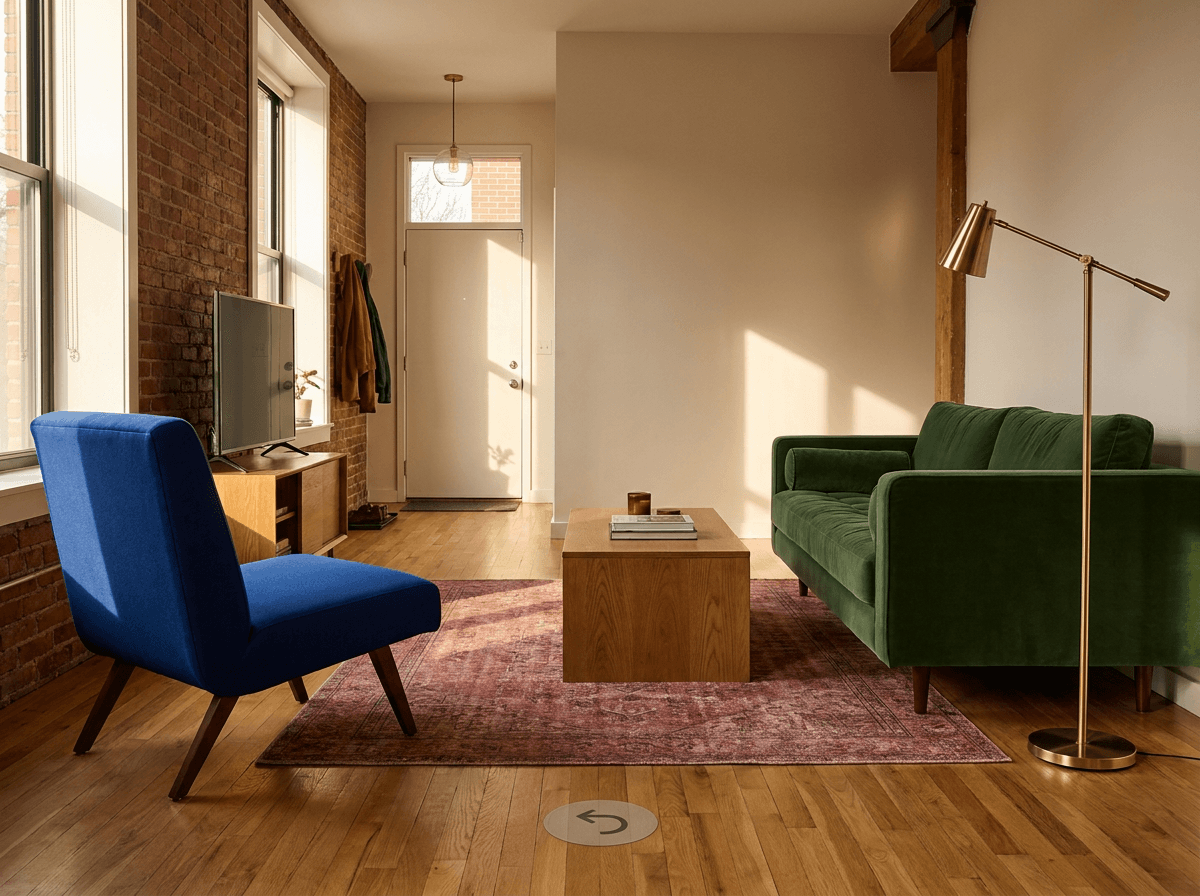
AI Image Reverse Angle Scene Consistency with Locked Assets
Improve AI image reverse angle scene consistency by locking architecture, furniture, materials, colors, and relative positions before moving the camera.
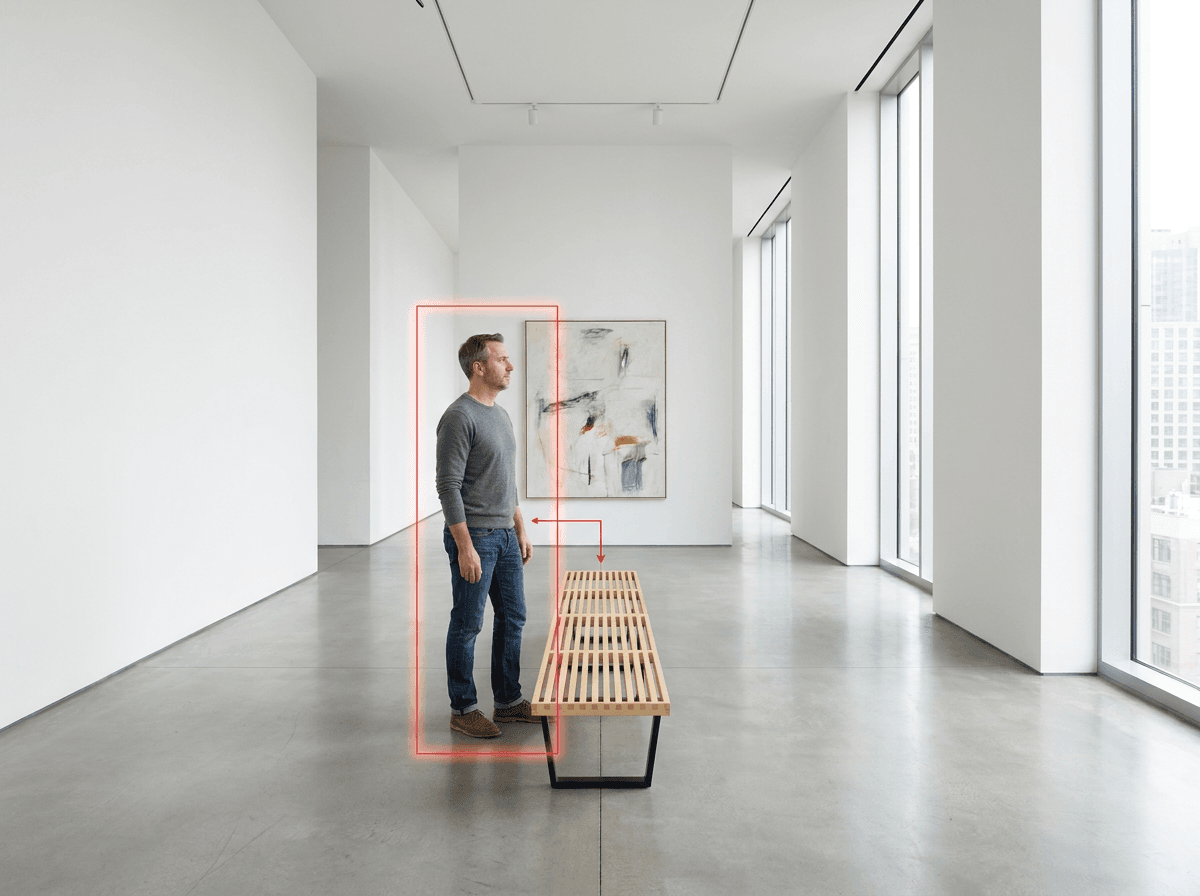
AI Image Character Scale Perspective Using Placement Guides
Use a placement box and a familiar scene object to control character size, grounded feet, and perspective in an AI image.
AI Video Speed Reference Objects for Faster-Looking Motion
Use foreground and background reference objects to give AI running videos clearer parallax, depth, and readable speed.
Pet Clone Dance Video from Photo: Make Three Pets Strut Together
Upload one animal photo to create a pet clone dance video from photo with three matching young pets performing a synchronized roadside routine.