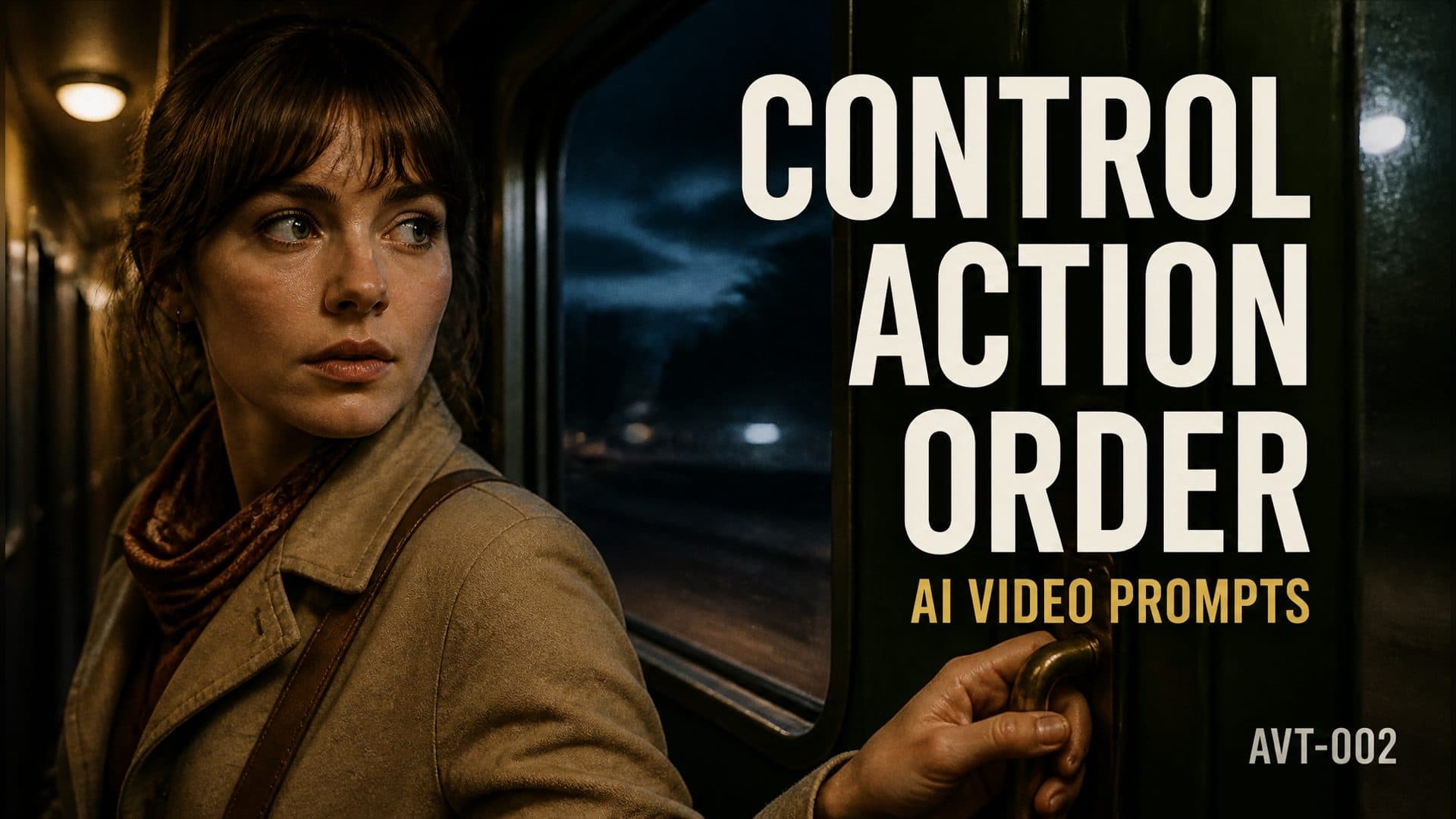
See how timed action beats, focus transfers, restrained camera movement, and a stable final frame control action order in AI video prompts.
9 min read
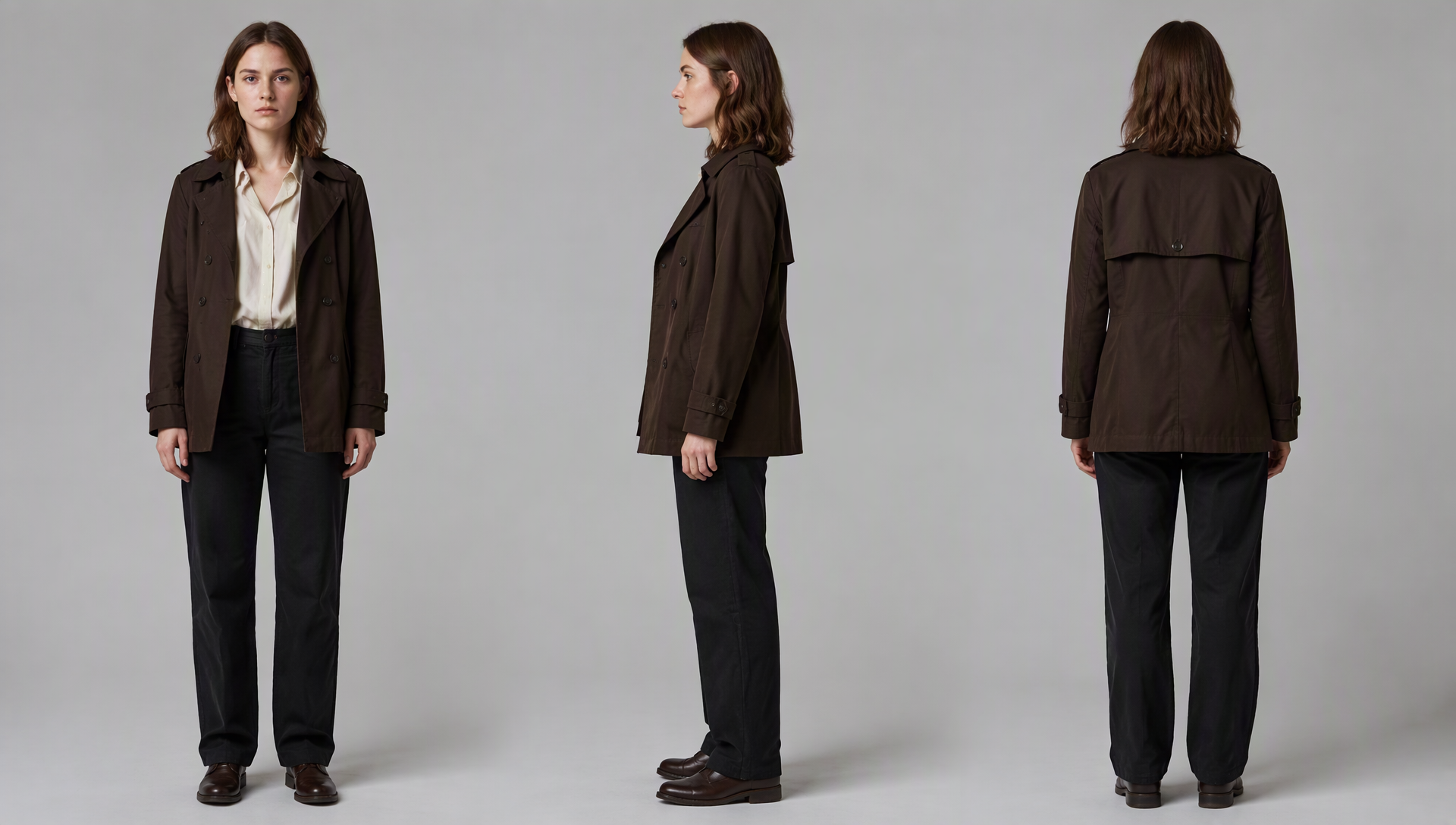
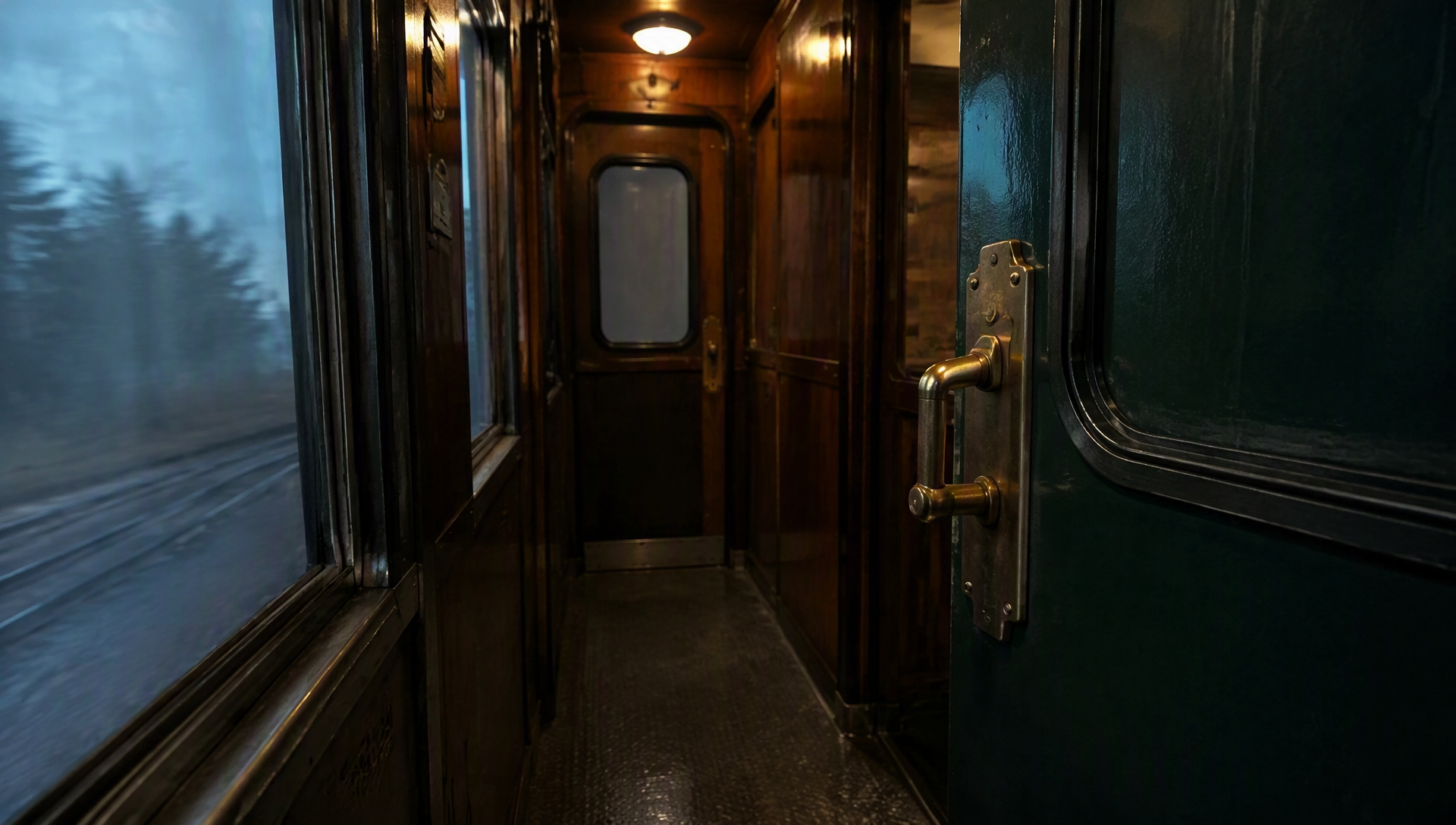
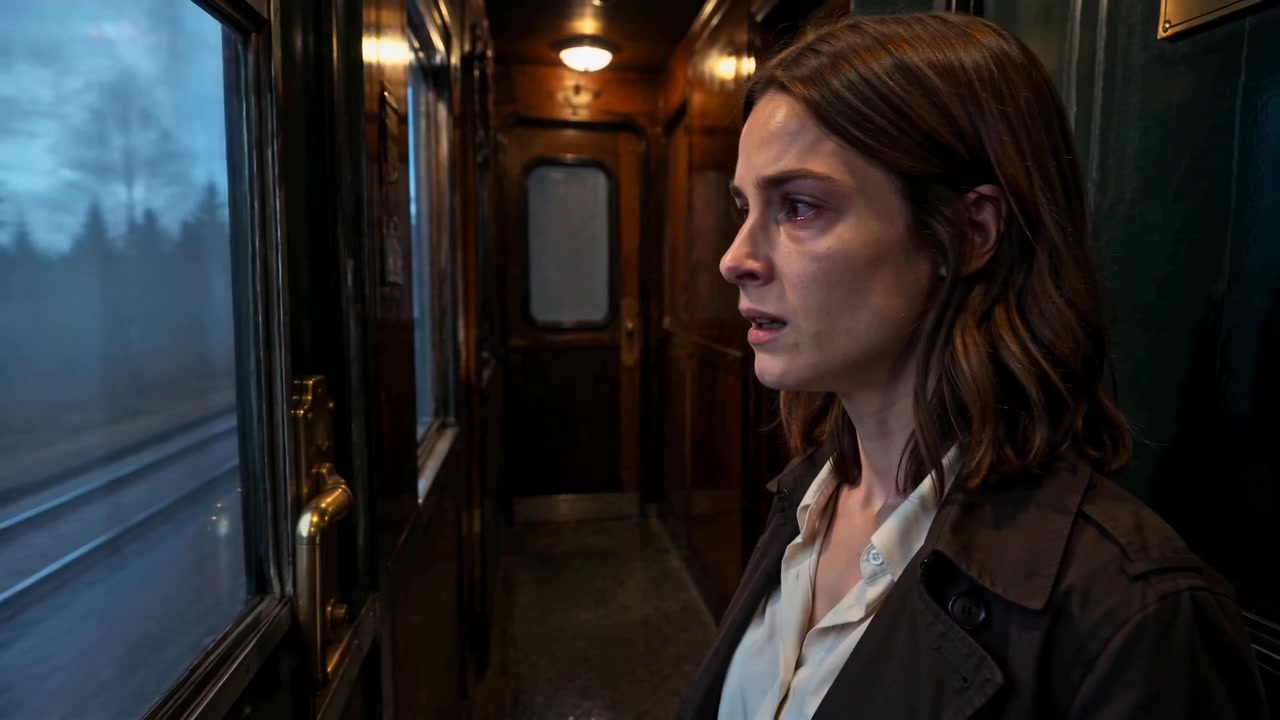
Use one character reference and one empty setting reference to make an eight-second scene in which the character reacts, reaches for an object, completes the contact, and settles into a readable ending. This A/B test examines action order in AI video prompts through a traveler inside a vintage train vestibule. The control describes the whole event in one continuous paragraph. The technique version assigns the face, hand, and final composition their own time ranges.
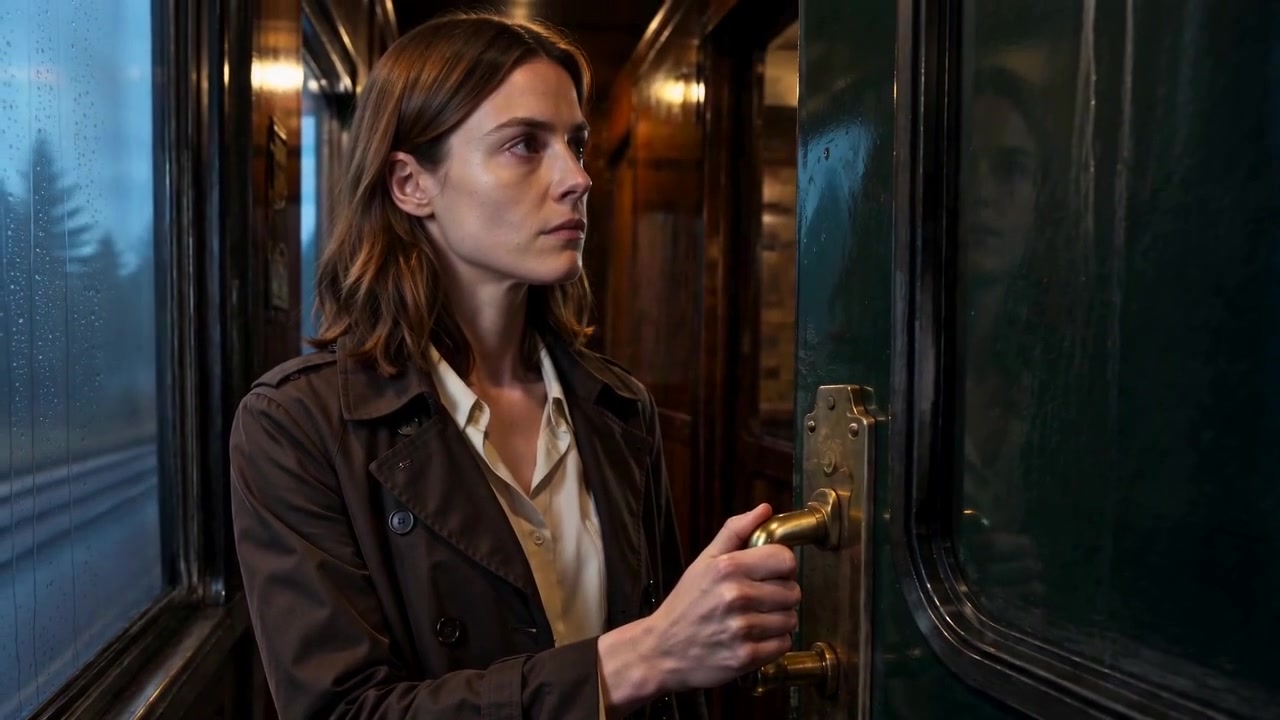
Both versions complete the basic story. The difference is where the viewer looks. The control keeps the woman's face, hand, and surrounding carriage visible through most of the shot. The technique version starts on her expression, moves down to isolate the hand at the brass handle, then returns to a wider frame that shows the completed grip and her raised gaze together.
That makes the technique useful for a specific problem: a prompt contains several dependent actions, but the generated video compresses them into one pose or moves the camera before the current beat is finished.
The A/B setup
Both groups use the same character reference, train vestibule reference, Seedance 2.0 Fast model, seed 102103, eight-second duration, 16:9 frame, 720p output, and generated audio. The audio brief is also shared: a low train rumble, carriage creaks, and room tone, with no dialogue or music.
The control prompt asks the traveler to stand beside the door, show restrained emotion, reach for the handle, tighten her fingers, look beyond the door, and stop. The camera stays close and follows naturally.
The technique prompt divides the same event into three parts:
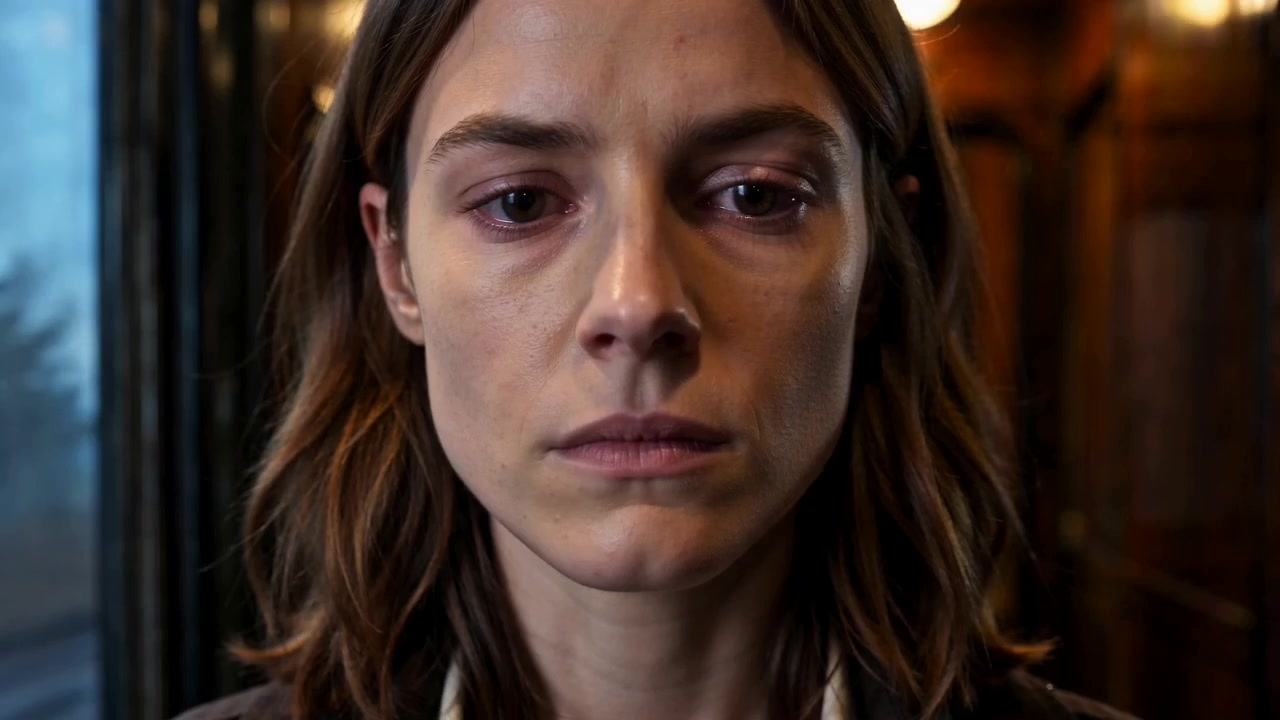
0-2 seconds: Hold an eye-level facial close-up while her eyes redden and she swallows once.
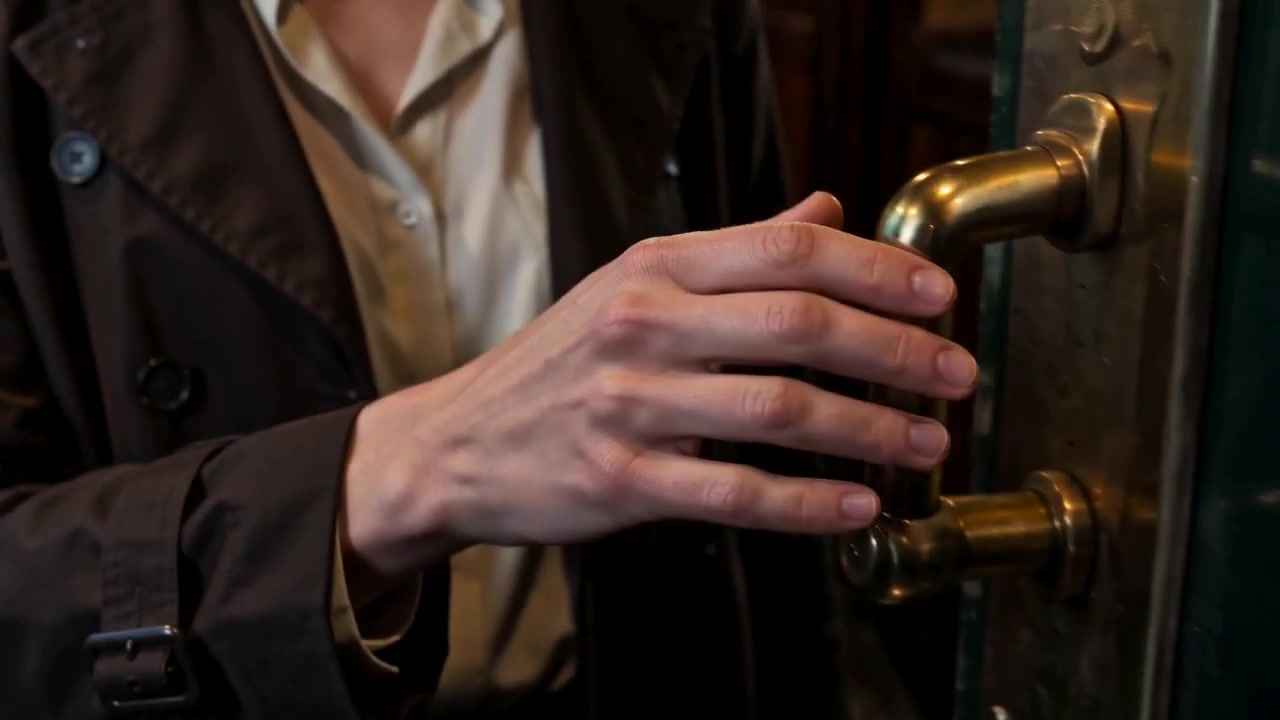
2-5 seconds: Move down a short distance as her right hand lifts, approaches, touches, and closes around the brass handle.
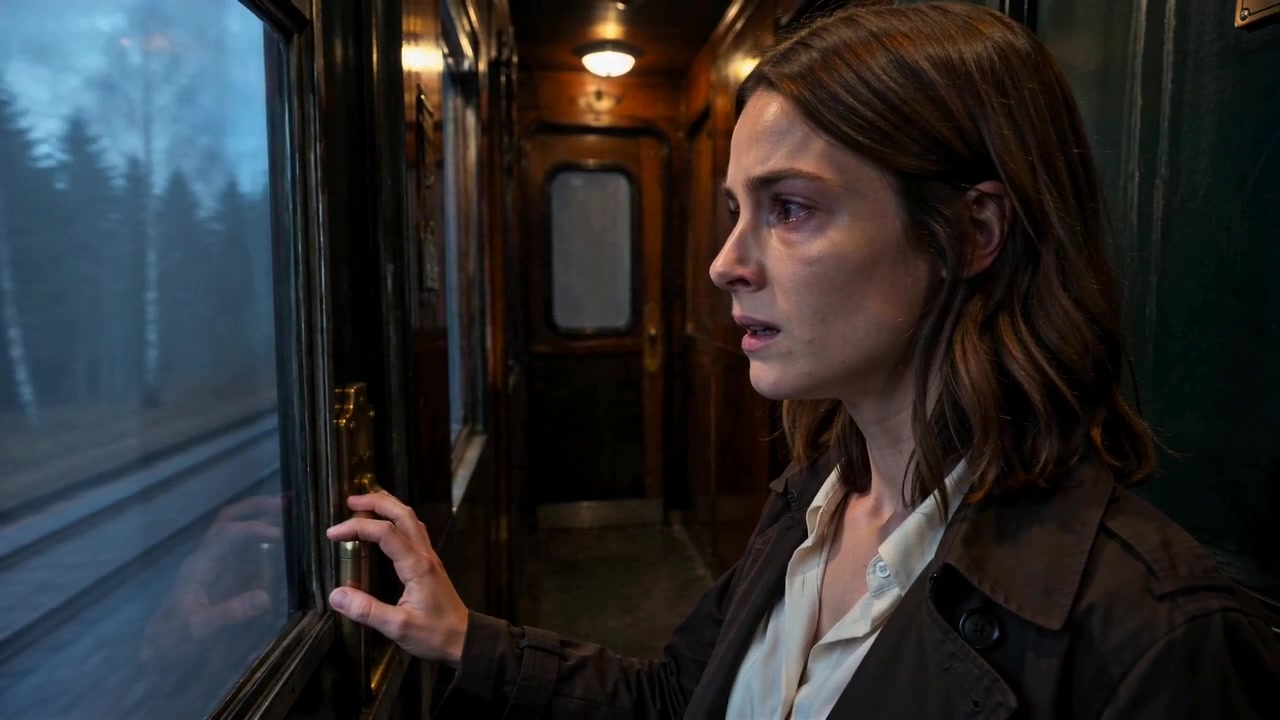
5-8 seconds: Return to a slightly wider close shot that includes her face, shoulder, and gripping hand. Let her raise her eyes, pause, and settle.
The model and settings stay fixed. The prompt structure is the variable.
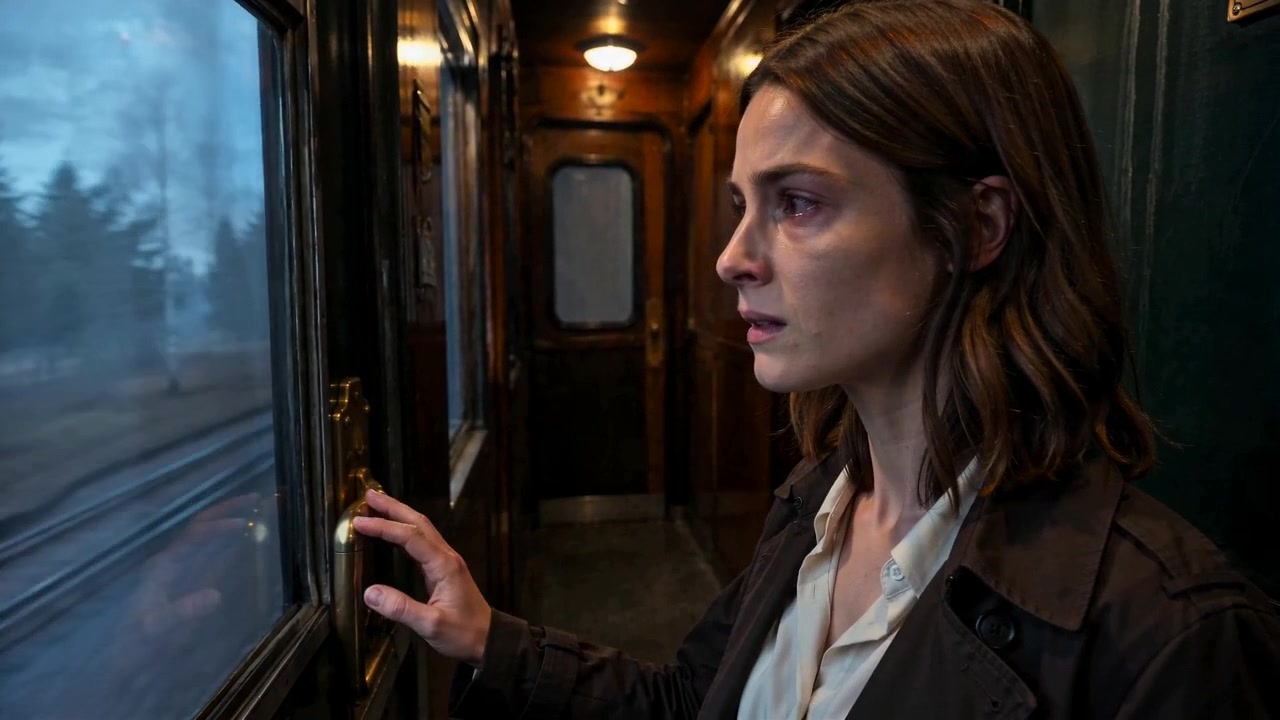
The control opens in a side-profile close shot. Her face, the passing scenery, the corridor, and the brass handle all compete for space. The framing establishes the location clearly, but the emotional beat shares attention with the setting.
The technique version begins much tighter and nearly frontal. Her eyes and closed mouth fill the frame. That opening matches the first timed task: establish the reaction before the arm begins to move.
The initial compositions differ, so this is a practical comparison, not a perfectly isolated laboratory test. What the frames do show is that an explicit opening shot size can change which story information receives priority.
Four seconds: the technique hands the frame to the action
At four seconds, both groups have reached the handle. The control keeps her face, upper body, and hand in one composition. The physical action is readable, though it remains part of the wider emotional portrait.
The technique version has moved down to a hand close-up. Her palm is at the handle and the fingers are closing. The shot now has one clear task: show contact. This is the strongest visible difference in the comparison because the prompt connects the action sequence to a specific focus transfer.
7.5 seconds: the technique returns to the result
The control ends close to its middle composition. She has completed the grip and still looks toward the window, but the shot size changes very little across the sampled frames.
The technique version pulls the story back together. The final frame includes her face, shoulder, hand, handle, and door. Her gaze has lifted while the grip remains in place. It reads as an ending because the result of the action and the reaction now share one stable composition.
Across the three samples, the technique produces a clear attention route:
face and emotion → hand and contact → face plus completed action
Why dependent actions collapse
A sentence such as "her eyes redden, she reaches for the handle, and she looks through the door" is easy for a person to read as a sequence. A video model can treat the same words as conditions that should appear at once. The first frame may already contain the hand on the handle, or the upward glance may begin before contact is complete.
Transitions create another problem. "Reach for the handle" contains several visible states: the arm lifts, the hand approaches, the palm makes contact, and the fingers close. Naming only the endpoint leaves the middle of the motion open to interpretation.
Camera movement can add pressure at the wrong time. A large push, orbit, or reframing asks the model to rebuild the body and the train interior while it is also solving a detailed hand interaction. For this scene, a short downward move and a restrained return are enough.
Write the shot in four layers
Give each time range one narrative task
Start with the story function of each section. For an eight-second scene, three sections are often enough.
0-2 seconds: establish the character's reaction.
2-5 seconds: complete the reach and grip.
5-8 seconds: show the reaction and finished grip together, then settle.
The timestamps establish order. They are more useful when paired with a visible task than when they simply divide the duration into equal pieces.
Describe the intermediate states
Write the part that a camera can observe. For the handle action, the useful sequence is:
lift the hand → approach the handle → make palm contact → close the fingers → hold
This gives the action a beginning, a process, and an endpoint. The same logic works for opening a letter, picking up a product, sitting down, or handing an object to another person.
Move the camera with the viewer's attention
Define where the shot starts, why it moves, what receives focus, and where it stops. In the train test, the camera starts at the face, drops only far enough to isolate the hand, and returns after contact is complete.
A fixed camera is often the better choice for a subtle expression. Movement earns its place when it reveals information that the current frame cannot show clearly.
Preserve the end state
Each section should hand a completed state to the next. The emotional close-up ends with the body ready to move. The hand section ends with the fingers closed around the handle. The final section keeps that grip while adding the raised gaze.
Reserve the last second for a hold. A settled frame gives the action time to register and leaves a clean point for the next edit.
A reusable action-order prompt
[Duration] continuous narrative shot.

[Opening time]:
Use [starting shot size and camera position].
Keep focus on [face, object, or body part].
Show [one small reaction or preparation].
End with the character ready for the main action.

[Middle time]:
Perform [one main action] through [ordered intermediate states].
Move the camera [short direction and distance] only to reveal [new visual priority].
Transfer focus from [first subject] to [second subject].
End with [completed physical state].

[Ending time]:
Move to [final shot size and composition].
Keep [the completed state] unchanged while adding [one closing reaction].
Hold the final second with stable framing, focus, and posture.

Keep character identity, wardrobe, object position, screen direction, and lighting consistent.
Use restrained camera motion and natural motion blur.
Add location ambience and action sounds that fit the setting.
How to run a cleaner comparison
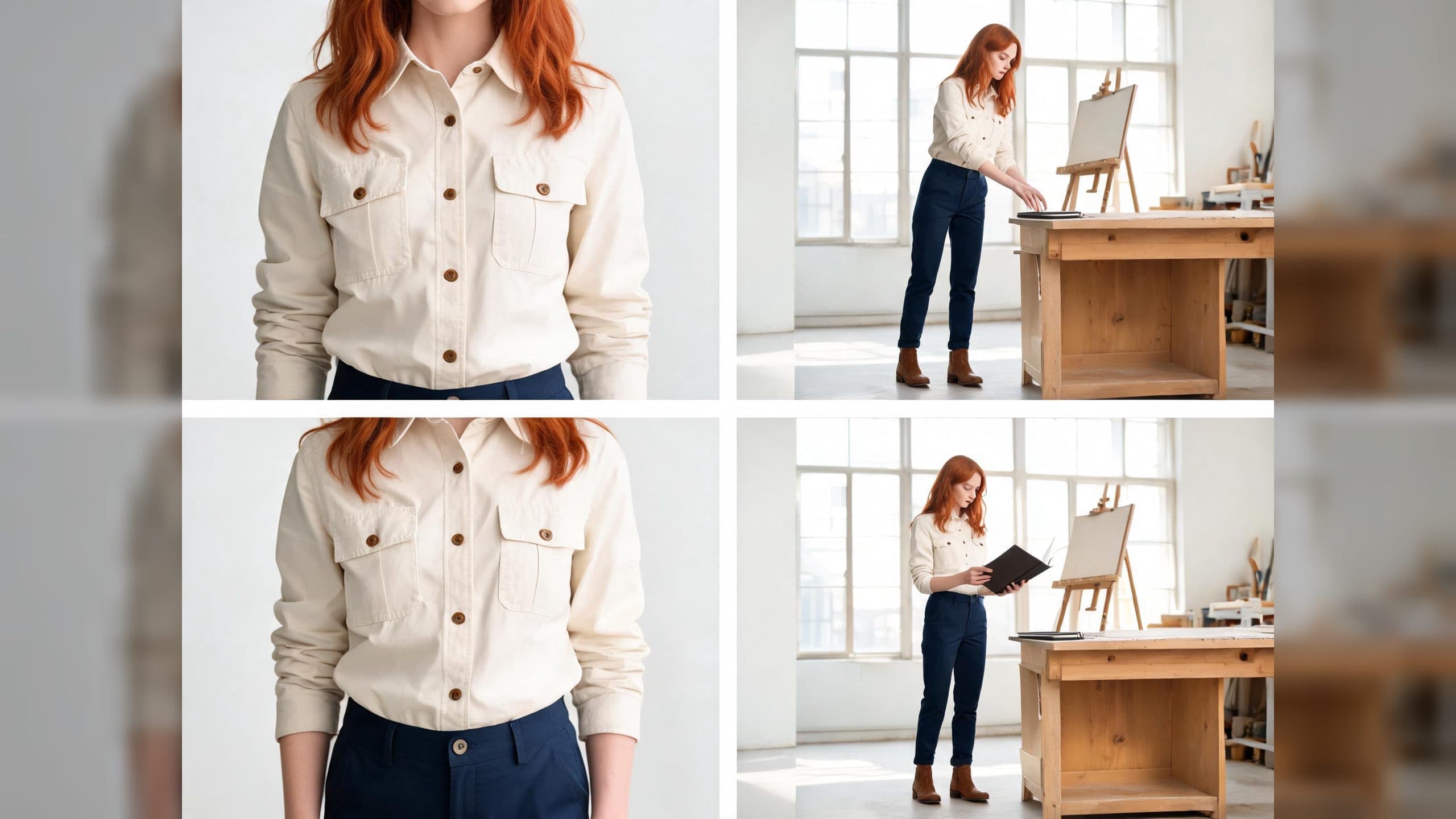
Use one full character reference on a plain background and one empty location reference with the important prop already placed. Duplicate the video setup so the model, references, seed, duration, aspect ratio, resolution, and audio settings stay identical.
Keep the control prompt focused on the complete event. In the second version, add the time ranges, intermediate action states, focus route, and final hold. Then compare the opening, middle, and ending frames before judging surface detail.
Record what the character is doing, where the viewer's attention lands, whether the important object stays in place, and whether the final pose is complete. One run can show what happened in that sample. Repeating the test with another seed is the next step if you want to judge how often the same pattern holds.
Where this method fits
A narrative filmmaker can use this structure for opening a door, discovering an object, or reading a letter. A product video can separate reaching, contact, demonstration, and the final product hold. A short social clip can give a suspense beat a readable reveal. In each case, the camera follows the information instead of moving for decoration.
Frequently asked questions
Does every AI video prompt need timestamps?
Use timestamps when the shot contains dependent actions or a planned change in framing and focus. A simple single-action shot can work with a start state, one action, and a final hold.
How many actions fit into eight seconds?
Judge by the number of visible transitions. This test uses one emotional beat, one reach-and-grip sequence, and one closing gaze. A more complex physical action needs more time or fewer instructions.
Should the camera move during a detailed hand action?
Use the smallest move that makes the hand readable. The AVT-002 technique uses a short downward move, then returns to a wider frame after the grip is complete.
What should I compare in an A/B test?
Check the first, middle, and final states. Look at action order, focus, shot size, object position, character identity, and whether the ending settles before the clip stops.
Use the AVT-002 action-order workflow to test the same timed structure with your own character, setting, and dependent action.