

ArtArch Newsroom
AI Video TechniquesHow to Write AI Video Dialogue Blocking Prompts
Learn how AI video dialogue blocking prompts assign tasks, stagger reactions, preserve screen zones, and motivate character movement in one scene.
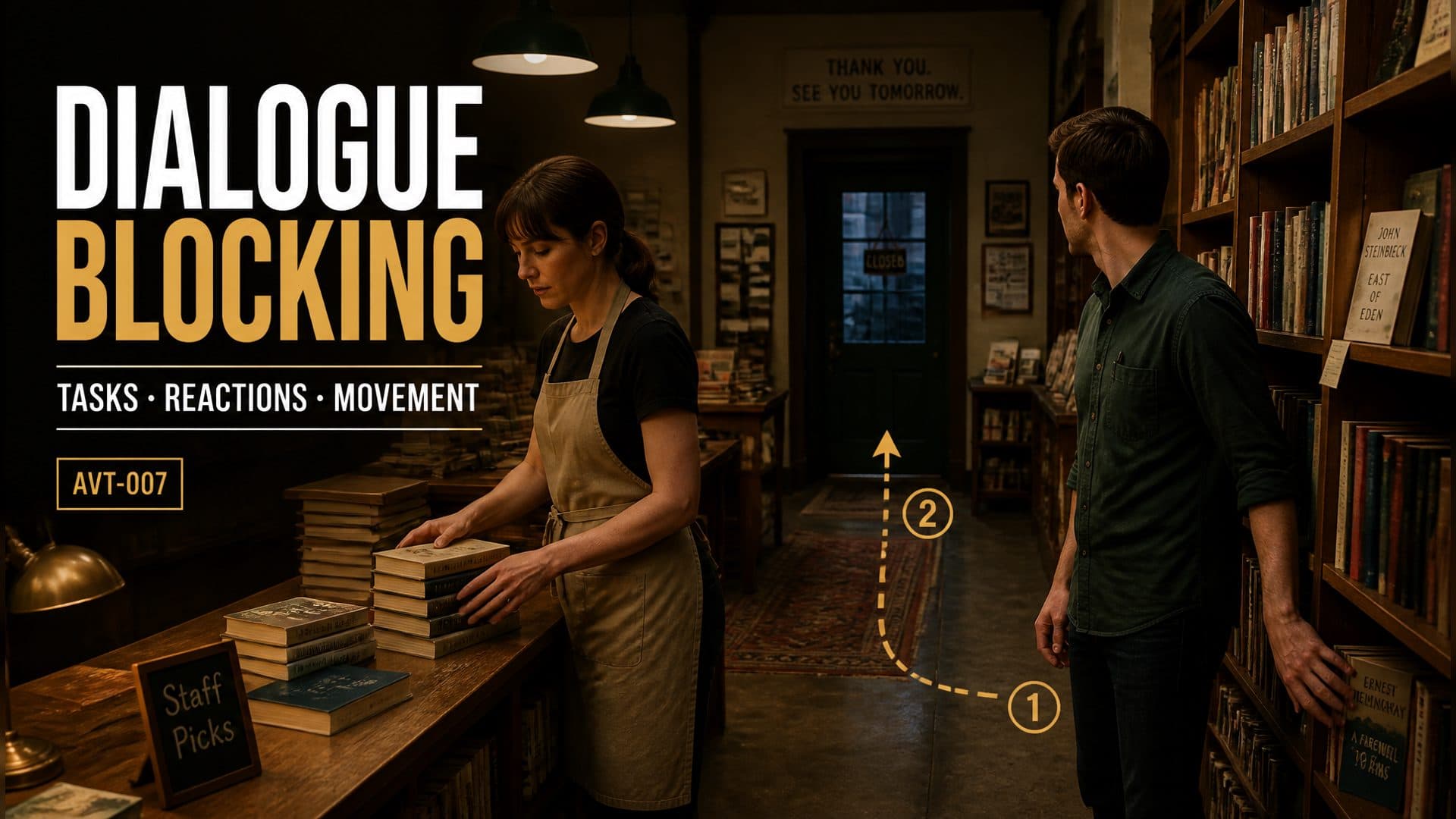
Provide a two-character reference and an empty location reference to create an AI video dialogue scene where each person has a clear task, reactions happen in sequence, and movement is motivated by the story. This AVT-007 experiment places two bookstore employees in a small shop shortly before closing time and builds an eight-second scene around work, an off-screen sound, and a brief check toward the rear door.
The scene feels active because both characters have something to do. It remains readable because their actions differ in intensity, timing, and purpose.
Blocking gives every character a job
Dialogue blocking is the design of where characters stand, what they do, when they look at one another, and why they move. In a short AI-generated scene, clear blocking helps separate two people who share the same space.
The bookstore setup assigns each person an independent task:
- Character A begins at the sorting counter on frame left, slowly stacking books with both hands.
- Character B begins at the tall bookshelf on frame right, pushing one book into place with the right hand.
- Both work mostly in profile and glance toward each other only when responding.
- The center aisle and rear doorway remain open as the route for later movement.
These starting positions establish a stable relationship before the story changes.
The broad two-person prompt
The control version describes general activity:
Two bookstore employees organize items while talking. They move naturally through the shop and look toward each other.
This creates a plausible scene, while leaving both characters free to walk, turn, and gesture at any moment. When two people receive the same broad instruction, they can mirror each other, move simultaneously, or compete for attention.
The motivated blocking prompt
The technique version divides the scene into tasks and reactions:
From 0–3 seconds, Character A continues stacking books at the left sorting counter while Character B performs a low-intensity shelving task on the right. From 3–5 seconds, an off-screen sound comes from the rear doorway. B stops first and turns toward it; A raises her eyes a moment later. From 5–8 seconds, B takes two steps along the right aisle toward the doorway to investigate, while A stays at the counter. The camera widens slightly to restate both positions.
The sequence has a simple dramatic chain:
routine work → off-screen cue → staggered reaction → motivated movement → new spatial arrangement
Each action changes the scene while preserving who occupies each zone.
Use asymmetric tasks
Two characters become easier to read when their tasks have different shapes. Stacking books uses both hands and remains concentrated at the counter. Shelving uses one hand and faces the bookcase. The contrast creates separate silhouettes and keeps the performers from appearing synchronized.
Keep exploring
More in AI Video Techniques
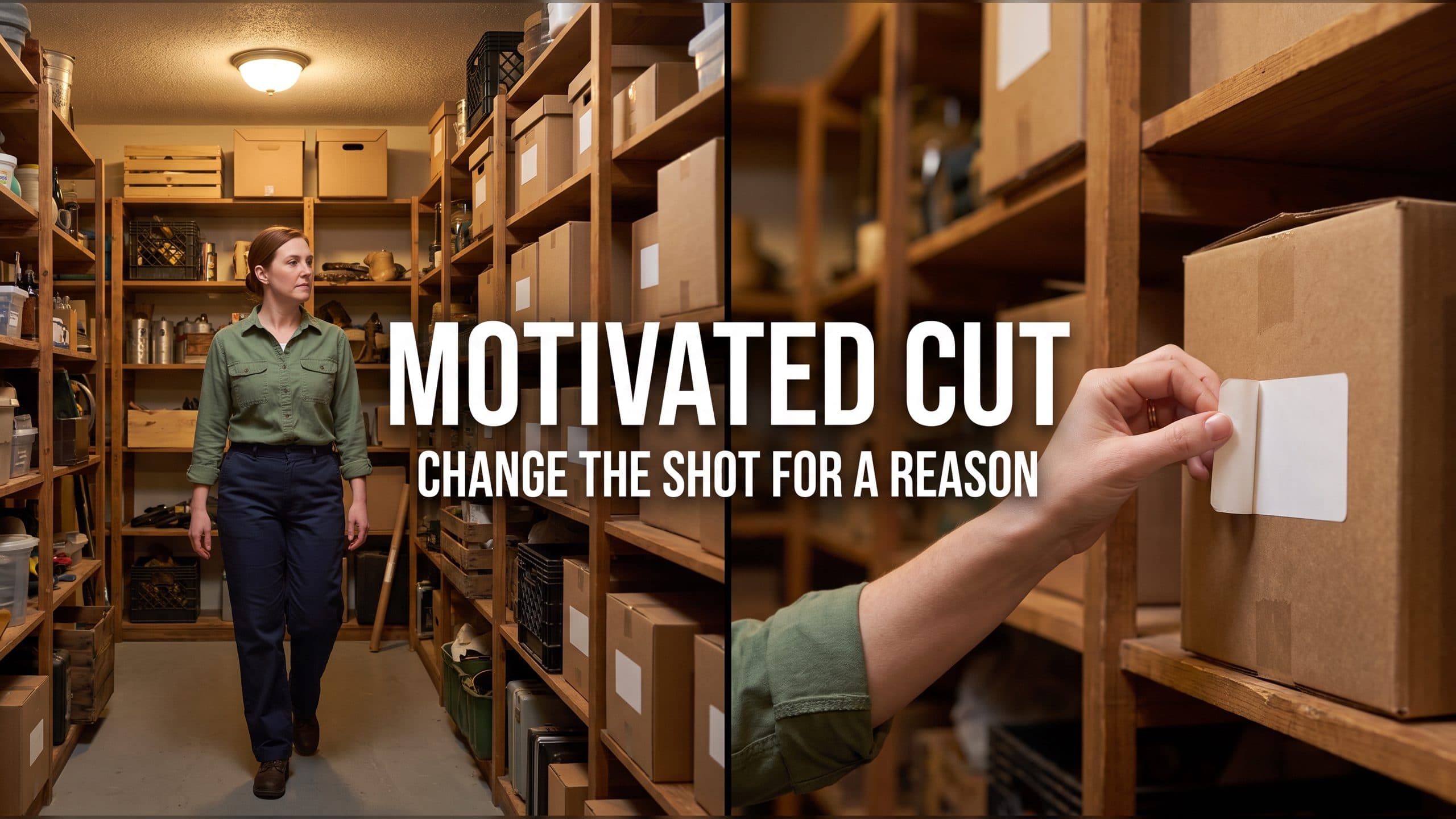
Motivated Cut AI Video Continuity: Change the Shot for a Reason
Learn how a visible action trigger, clear shot-size change, and locked screen direction create more intentional same-scene AI video edits.
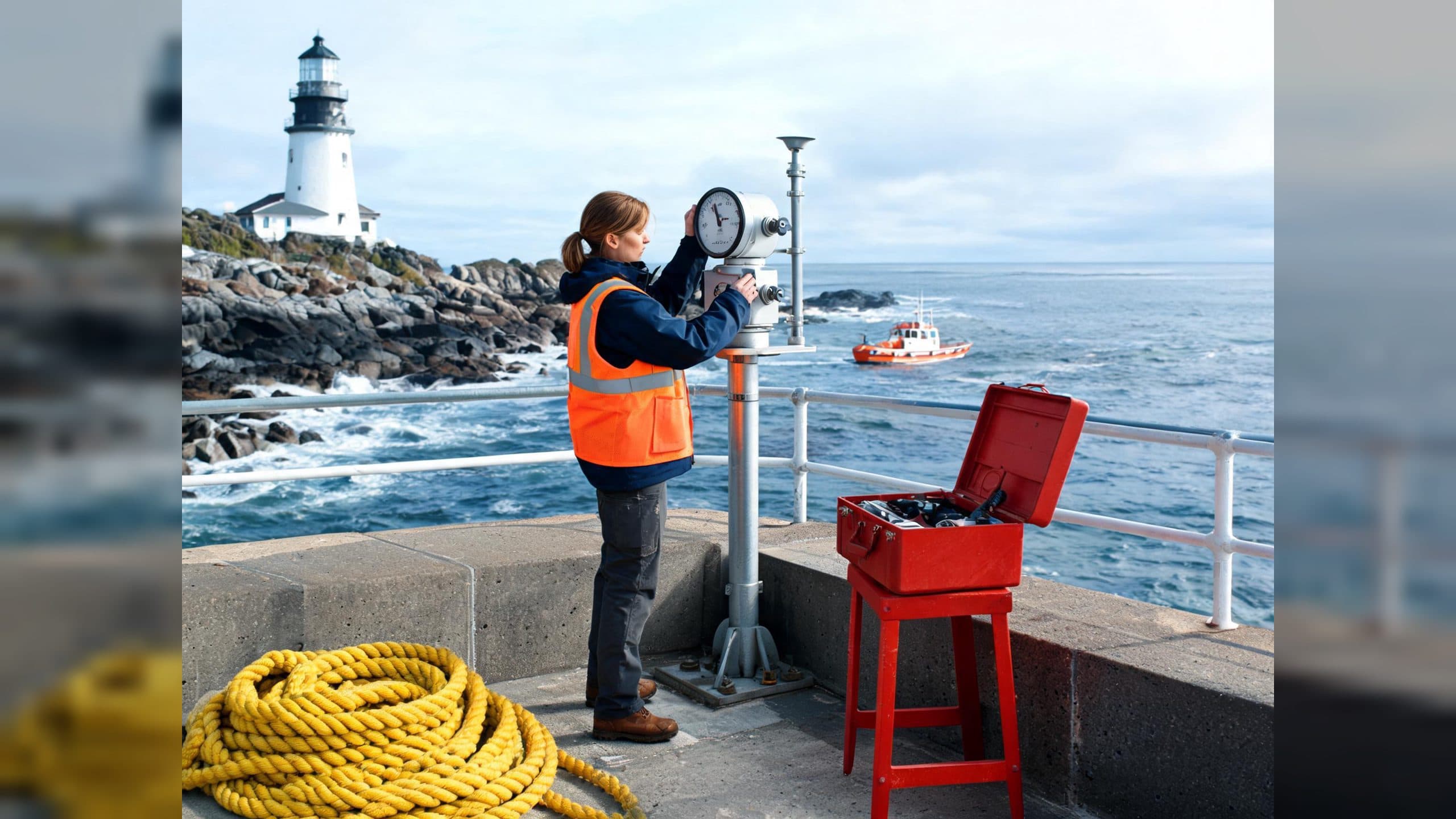
Deep Depth of Field AI Video: Keep Every Story Layer Readable
Learn how deep depth of field AI video prompts keep foreground tools, central action, and distant location cues readable in one layered shot.

Medium Depth of Field AI Video: Balance Subject and Setting
Learn how medium depth of field AI video prompts keep hands and active objects readable while preserving recognizable environmental context.

AI Video Character Reference Framing: Match Portraits to Landscape Shots
Prepare vertical character portraits for landscape AI video by matching aspect ratio, body scale, headroom, floor space, and movement room before generation.