

ArtArch Newsroom
Creative AgentA First-and-Last-Frame Product Swap Video
first-and-last-frame product swap video case study with saved ArtArch Studio media, prompt decisions, visible results, and practical production notes.
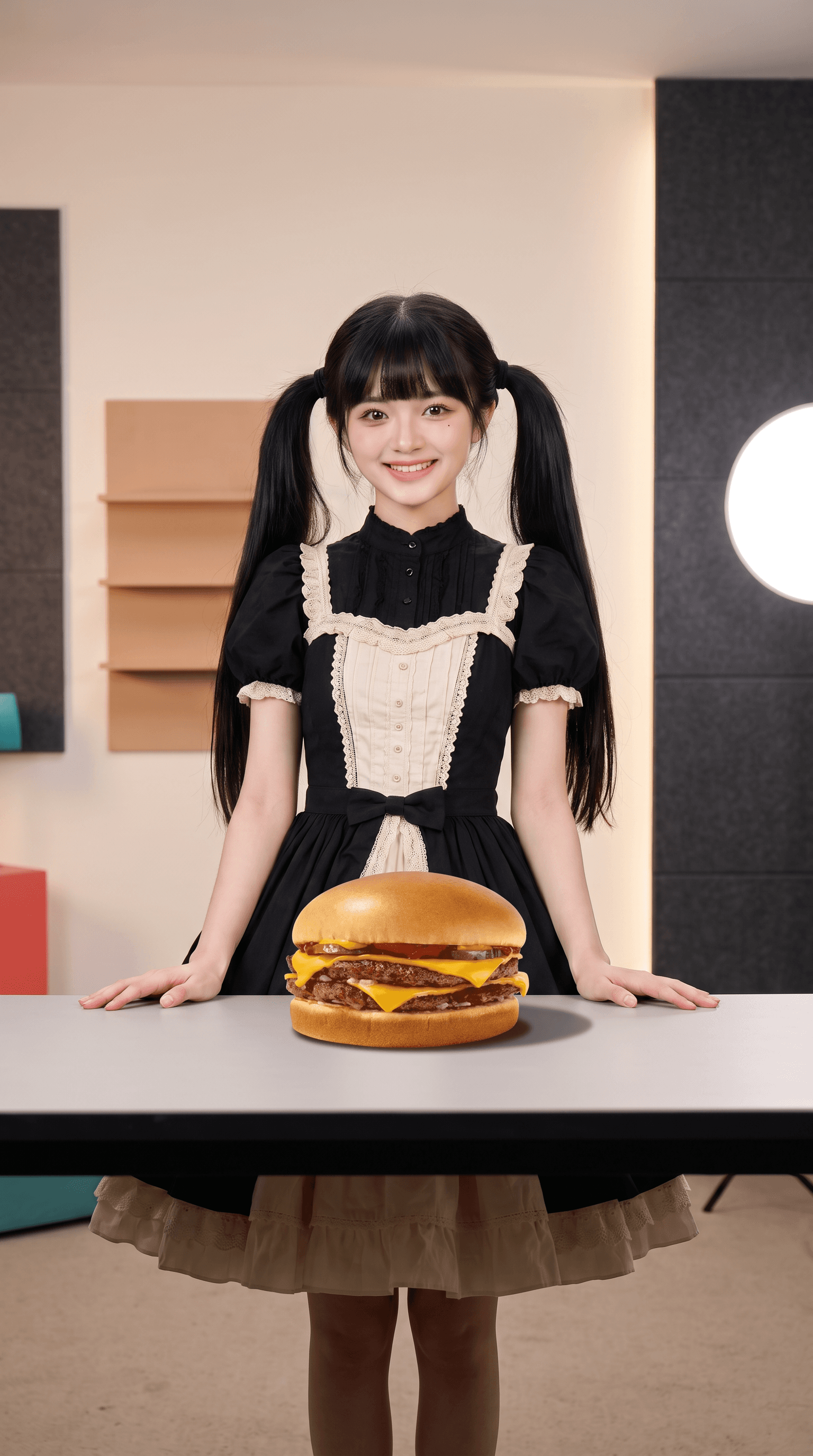
The practical question behind this first-and-last-frame product swap video test was how to turn a hamburger display frame and a handbag display frame into a fixed-camera clip where the host removes one item and presents the next. The answer comes from the prompt decisions and the actual ArtArch Studio output, not the brief alone.
Canvas video: a fixed-camera clip where the host removes one item and presents the next.
From request to frame
The user supplied a hamburger display frame and a handbag display frame. The working instruction was direct: Pick up the burger, clear the table, retrieve the handbag from below frame, and finish on the supplied handbag composition.
The visible result
The contact sheet shows a readable action sequence: burger display, removal, an empty-table beat, handbag lift, and final placement. The host and studio remain recognizable across the swap.
The next production step follows directly from that evidence: Use object handling to connect exact endpoints. The action explains why the product changes instead of relying on a visual morph.
Make a related version
- Start with a hamburger display frame and a handbag display frame.
- Write the visible constraint that matters most: Use object handling to connect exact endpoints. The action explains why the product changes instead of relying on a visual morph.
- Generate one reviewable result, inspect still frames as well as playback, and keep the saved canvas media as the production record.
A related brief can support shopping segments, menu-to-merchandise switches, catalog playlists, or live-show cues.
Open the source ArtArch Studio canvas to inspect the saved creative context.
Frequently asked questions
What should I prepare first?
Prepare a hamburger display frame and a handbag display frame. Use the clearest original files available and decide which one owns identity, product detail, or endpoint composition.
What should I inspect in the result?
Check the result against this visible target: a fixed-camera clip where the host removes one item and presents the next. Review framing, subject identity, props, text, and the first and last frames when video is involved.
Can I reuse the same setup?
Yes. Keep the canvas media and the decision that controlled it: Use object handling to connect exact endpoints. The action explains why the product changes instead of relying on a visual morph.
Open the experience from the template card on this page and try the template with a related creative request.
Keep exploring
More in Creative Agent

Designing a Three-Scene AI Character State Machine
three-scene AI character state machine case study with saved ArtArch Studio media, prompt decisions, visible results, and practical production notes.

Extracting First and Last Frames to Plan AI Video Transitions
AI video transitions case study with saved ArtArch Studio media, prompt decisions, visible results, and practical production notes.
Fan-Dance-to-Idle AI Transition With a Clean Endpoint
fan-dance-to-idle AI transition case study with saved ArtArch Studio media, prompt decisions, visible results, and practical production notes.
An Idle-to-Fan-Dance AI Transition With the Prop as the Cue
idle-to-fan-dance AI transition case study with saved ArtArch Studio media, prompt decisions, visible results, and practical production notes.